There is a category of details in bespoke tailoring that most clients do not think about until they become conscious of them. The lining of a jacket. The finish of interior seams. The exact shape of a lapel roll. And near the top of that list, the buttons.
Buttons seem like the least important element of a suit. They are small, they are functional, and for most men they exist as a background detail rather than a considered choice. This is exactly why they matter. The buttons on a bespoke garment are one of the small, quiet indicators of the level of care that went into the whole. Get them right, and the entire garment reads as more considered. Get them wrong, and every other refinement in the suit is undermined.
This guide covers the primary button materials used in bespoke tailoring, what each is, when to choose which, and why the small detail of button choice quietly defines the overall garment.
Why Buttons Matter More Than You'd Expect
A well-chosen button does three things at once. It suits the fabric it sits against. It ages appropriately with the rest of the garment. And it signals, to anyone paying attention, that the person wearing the suit noticed and cared about the small decisions.
A poorly chosen button, or a default plastic button, does the opposite. It looks like what it is: an afterthought. Even on an otherwise beautifully constructed garment, a cheap button reads immediately as a compromise. And because buttons are visible at close range, in the daily interactions of business and social life, the compromise gets noticed.
This is why every bespoke commission at Samuel Baron includes an intentional conversation about buttons. It is not a decision that should be made by default.
The Primary Button Materials
There are five main button materials worth understanding for bespoke tailoring. Each has its own character, its own applications, and its own way of aging.
Horn
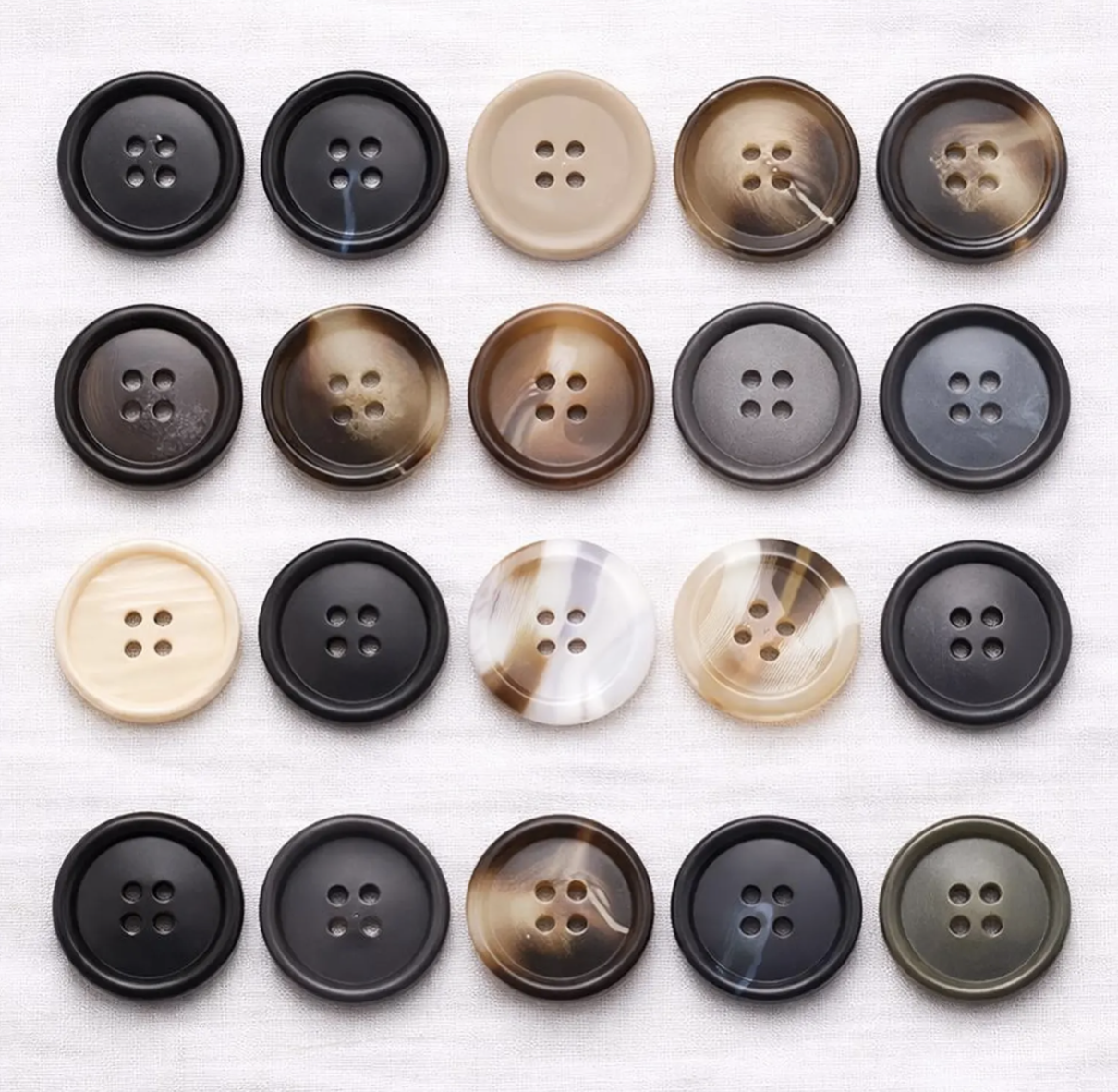
Horn is the classic button for quality tailoring, and for good reason. Made from actual animal horn (typically water buffalo), horn buttons carry natural warmth, a subtle variation from button to button that no synthetic can imitate, and a hand feel that is genuinely different from plastic or metal alternatives.
Horn buttons come in a range of natural colors, from very light cream through medium brown and into deep, almost black brown. The color often varies within a single button, giving each one a distinctive character. For most bespoke suits and sport coats, horn is the default choice. It suits business tailoring, it suits sport coats, and it ages with the garment in a way that plastic never will.
The trade-off with horn is durability. It is a natural material, and it can crack or chip if treated roughly. For quality tailoring worn with reasonable care, however, horn buttons will last the life of the garment and often beyond.
Mother-of-Pearl
Mother-of-pearl is the classic button for fine dress shirts. Made from the inner layer of certain mollusk shells, it has a luminous quality that catches light in a way no synthetic material can match. The natural iridescence of mother-of-pearl gives a fine dress shirt part of what makes it feel genuinely refined.
For custom shirts, mother-of-pearl is almost always the right choice. It signals quality immediately, it wears well over years of washing and use, and it ages with a slight patina that becomes part of the shirt's character. It is more expensive than plastic alternatives, but the difference is entirely worth it for shirts intended to be part of a considered wardrobe.
Mother-of-pearl is also occasionally used on formal wear, particularly on tuxedo shirt studs and cuff links, and on evening jackets where a small luminous detail suits the formality of the occasion.
Corozo
Corozo is a lesser-known but excellent button material worth understanding. Made from the seed of the tagua palm, a South American tree, corozo is sometimes called vegetable ivory. It has a smooth surface, takes color well, and offers a middle ground between horn and synthetic in both appearance and cost.
Corozo works particularly well on suits and sport coats where a more uniform button appearance is preferred over the natural variation of horn. It also comes in a wider range of colors than horn, which makes it useful for coordinating buttons with unusual fabric colors or specific style choices.
Because corozo comes from a renewable plant source rather than an animal product, it also appeals to clients who prefer sustainable material choices without sacrificing quality.
Brass and Metal
Metal buttons are the classic choice for blazers, particularly navy blazers in the traditional English style. A brass button on a navy blazer is one of the most recognizable details in menswear, and it carries a specific meaning: this jacket is a blazer, not a suit jacket. The distinction matters, and metal buttons make it visible.
Beyond blazers, metal buttons occasionally appear on outerwear like peacoats and field jackets, where their durability and utility suit the garment's character. They are almost never appropriate on business suits or dress sport coats, where their formality is wrong for the context.
Fabric-Covered
Fabric-covered buttons, sometimes called self-covered buttons, are made by wrapping a small metal or plastic core in the same fabric as the garment. They are used almost exclusively on tuxedos and formalwear, where the intent is for the buttons to disappear visually against the outer cloth.
On a tuxedo, fabric-covered buttons in black satin or grosgrain create the seamless, refined appearance that defines proper evening wear. They are not appropriate for business suits or casual tailoring, but for formal occasions they are the correct choice and nothing else quite substitutes.
How to Choose
For most clients, the right approach is to match the button to the intended use of the garment.
For business suits and sport coats, horn is the default, with corozo as a strong alternative for a slightly more uniform appearance.
For dress shirts, mother-of-pearl is almost always the right choice.
For blazers, brass or another metal button suits the traditional intent of the garment.
For tuxedos and formalwear, fabric-covered buttons in the appropriate finish complete the formality.
For clients building a wardrobe over time, keeping consistent button choices across similar garments produces a sense of coherence. The bespoke suits in a wardrobe all use horn or all use corozo. The custom shirts all use mother-of-pearl. Small details like this add up to a wardrobe that reads as considered and coherent rather than accumulated.
The Detail Worth Getting Right
Buttons are one of the small details on a bespoke garment that separate genuine tailoring from imitation. They do not draw attention on their own. But their absence, or their substitution with cheap alternatives, is immediately noticeable to anyone with a trained eye.
At Samuel Baron Clothiers, every bespoke commission includes a considered conversation about buttons. What material suits the fabric. What color complements the outer cloth. Whether horn, corozo, or something else best fits the character of the garment. These are quiet decisions, but they are worth making with intention.
If you would like to talk through button choices for an upcoming commission, or explore what might work best for a garment you're planning, we welcome the conversation. Appointments are available at our Shadyside showroom.
Samuel Baron Clothiers is a bespoke men's clothier located at 201 South Highland Avenue in Shadyside, Pittsburgh, PA. Appointments are required. Call (412) 441-1144 or visit samuelbaronclothiers.com to book.