Full-Hand vs Half-Hand Canvas Suits
Craft, Tradition, and How to Choose the Right Construction
Canvas construction is often discussed as a technical specification, but its roots are far more human. Long before it became a line item on a suit description, hand-canvassing was simply how tailored jackets were made—by shaping cloth to the body, one stitch at a time.
Understanding the difference between full-hand canvassed suits and half-hand canvassed suits isn’t about chasing the “best” option. It’s about understanding the craft behind the garment and choosing the level of construction that aligns with how you actually wear your clothes.
The History of Hand-Canvassed Suit Construction
Before industrial tailoring, all jackets were canvassed by hand. Tailors used layers of horsehair and natural fibers, pad-stitched into the chest and lapels, to give garments structure, longevity, and comfort.
As ready-to-wear production expanded, manufacturers sought faster methods. Fused construction—where structure is glued rather than stitched—was introduced to increase efficiency. While it reduced production time and cost, it also removed much of the adaptability that made traditional tailoring comfortable and durable.
Hand-canvassing remained the benchmark, preserved in bespoke tailoring and high-end made-to-measure garments where performance and longevity still mattered.
What “Hand-Canvas” Means in a Suit Jacket
When a suit jacket is described as hand-canvassed, it refers not just to the presence of canvas, but to how that canvas is attached.
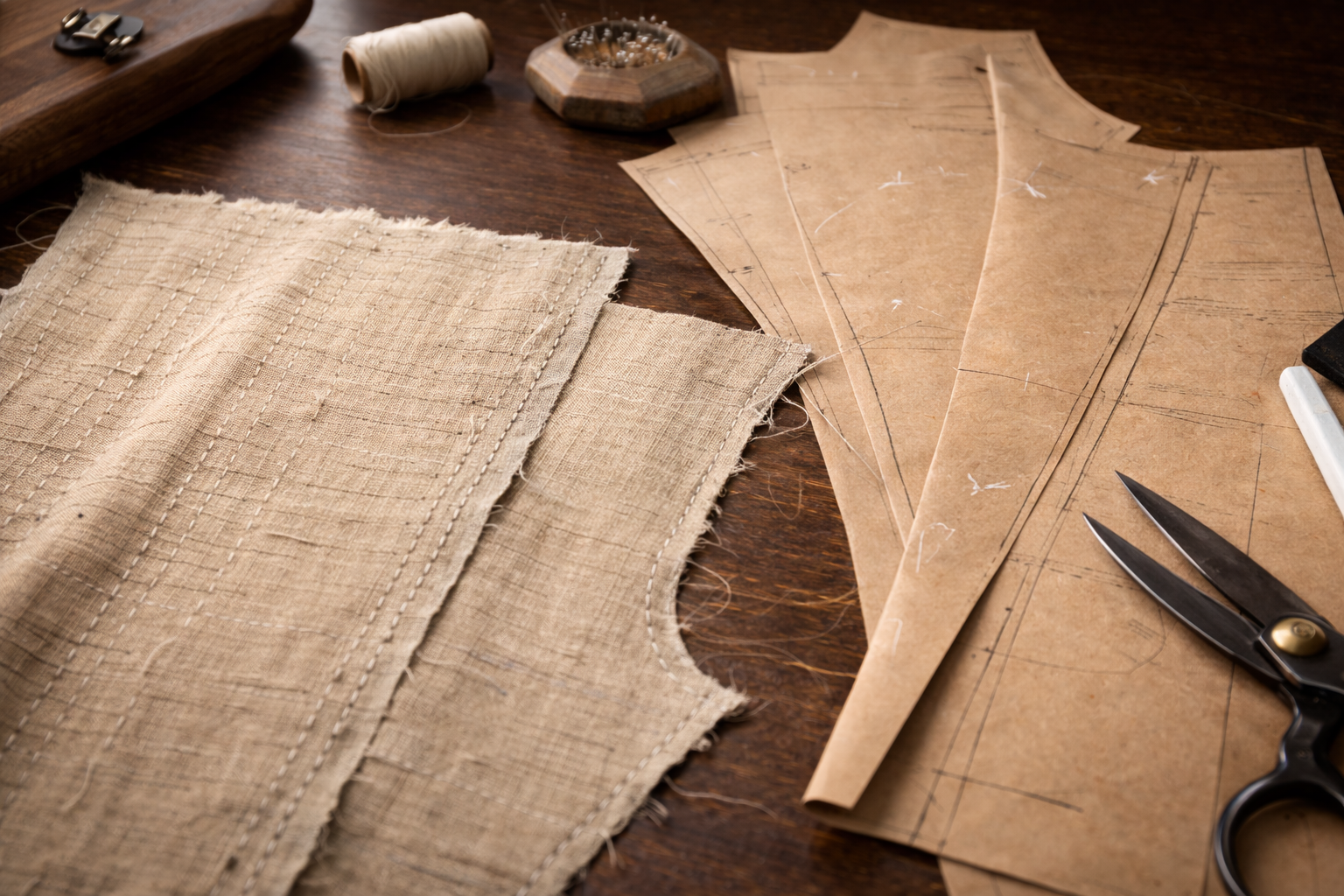
In hand-canvassed construction, the internal canvas is pad-stitched by hand to the outer fabric through the chest and lapels. These thousands of individual stitches allow the fabric and canvas to move together as a single system, rather than behaving like separate layers.
This is what creates a natural chest shape, a clean lapel roll, and a jacket that improves with wear rather than breaking down.
Full-Hand Canvassed Suits: Traditional Construction
A full-hand canvassed suit jacket uses hand pad-stitching throughout the entire front of the garment—from the shoulders through the chest and down to the hem.
This continuous structure allows the jacket to age evenly and maintain balance as the fabric relaxes over time.
Full-hand canvassed construction typically offers:
- a natural drape through the chest
- lapels that roll cleanly and consistently
- a jacket that subtly adapts to the wearer’s posture
- long-term durability, especially in finer suit fabrics
Historically associated with bespoke tailoring, full-hand canvassing remains ideal for suits worn frequently or intended to last for many years.
Half-Hand Canvassed Suits: Modern Precision
A half-hand canvassed suit jacket concentrates hand pad-stitching through the upper portion of the jacket—the chest and lapels—while transitioning to a lighter, machine-assisted construction below.
This approach reflects a modern understanding of how jackets are worn. Structure is preserved where it matters most visually, while overall weight and rigidity are reduced.
Half-hand canvassed suits often provide:
- a clean, structured upper chest
- lighter weight and improved comfort
- better performance in warmer seasons
- excellent results in rotational wardrobes
When executed properly, half-hand canvassing delivers refinement without unnecessary heaviness.
How to Choose Between Full and Half-Hand Canvas
Choosing between full-hand vs half-hand canvassed suits should be guided by use, not ideology.
Full-hand canvassed suits are well suited to:
- daily or frequent suit wear
- finer fabrics that benefit from consistent internal support
- clients who value how a jacket evolves with time
Half-hand canvassed suits are often ideal for:
- seasonal or rotational tailoring
- travel-focused wardrobes
- spring and summer suits where weight matters
Neither construction is inherently superior. The right choice is the one that aligns with how the suit will live in your wardrobe.
Why Hand-Canvas Construction Still Matters
In an era of shortcuts, hand-canvassing remains one of the few construction details that directly affects how a suit feels every time it’s worn.
It isn’t about prestige. It’s about comfort, movement, and longevity—qualities that can’t be added after the fact.
A More Intentional Wardrobe Starts Here
Understanding suit construction leads to better decisions and garments that feel considered rather than overbuilt.
If you’re refining your wardrobe and want guidance on fabric, construction, and craftsmanship that reflects how you actually dress, we invite you to schedule a consultation with our team.
We invite you to schedule a consultation