Most fabric stories are stories of mills and looms. Harris Tweed is a story of islands. Of a scattered community of Hebridean weavers, working from their own homes on treadle looms, producing cloth that traces its lineage to a way of life that predates industrial textile production entirely. It is the only fabric in the world protected by its own Act of Parliament, and the reason for that unusual legal status is worth understanding.
Harris Tweed is one of the fabrics we offer for sport coats and jackets at Samuel Baron Clothiers, and it is one of the more interesting stories in the entire textile world. This is a look at what Harris Tweed actually is, where it comes from, and why the cloth carries a specific character that no other tweed quite matches.
The Only Fabric with Its Own Law
There are laws that protect the names of foods and wines. Champagne must come from Champagne. Parmigiano Reggiano must come from a specific region of Italy. Similar protections exist for hundreds of foods and drinks around the world, established to prevent the counterfeiting of names that carry commercial and cultural significance.
Very few fabrics enjoy this kind of legal protection. Harris Tweed is the exception. The Harris Tweed Act of 1993, passed by the United Kingdom Parliament, defines what Harris Tweed is and forbids anyone from selling cloth under that name unless it meets the strict criteria the Act sets out. Every genuine piece of Harris Tweed must be, in the exact language of the Act, "handwoven by the islanders at their homes in the Outer Hebrides, finished in the Outer Hebrides, and made from pure virgin wool dyed and spun in the Outer Hebrides."
Every stage of the production, in other words, must happen in a specific place, using specific methods, by specific people. No cloth produced anywhere else in the world can legally be called Harris Tweed. The protection is enforced by the Harris Tweed Authority, a statutory body created by the same Act to safeguard the industry and inspect every piece of cloth that carries the Harris Tweed name.
This is not a marketing device. It is genuine legal protection, the kind of protection normally reserved for regional foods and cultural heritage. That such protection was extended to a fabric is a reflection of what Harris Tweed represents: not just a textile, but a way of life that the islanders themselves fought to preserve.
The Islands Where It's Made
The Outer Hebrides are a chain of islands off the northwest coast of Scotland. They are windswept, remote, and beautiful. The population is small. The economy has always been challenging. And it is in this specific geography that Harris Tweed has been produced for the better part of two centuries.
The relevant islands include Harris (which gave the cloth its name), Lewis, North Uist, Benbecula, South Uist, and Barra. On each of these islands, in villages and crofts, individual weavers produce the cloth in their own homes on foot-powered treadle looms. There is no factory. There is no assembly line. Each length of Harris Tweed is the work of one weaver, working at their own pace, on their own loom, in their own space.
This is unusual in the modern textile world. Almost all commercial fabric today is produced in factories, on industrial looms, at high speed. Harris Tweed is one of the very few remaining fabrics produced entirely by hand, at home, by artisans who have often inherited the craft from previous generations. At the height of the industry, an estimated fifty percent of the population of the islands was involved in tweed production. Today the numbers are smaller, but the tradition continues.
How Harris Tweed Is Actually Made
The production of Harris Tweed follows a specific sequence, each stage of which must happen in the Outer Hebrides.
The Wool
Harris Tweed is made from pure virgin wool. Historically, the wool came primarily from sheep raised on the islands themselves. Today, much of the raw wool is sourced from Scottish mainland flocks, but all subsequent processing must happen in the Outer Hebrides. The wool is blended to combine the qualities of different fleeces, producing yarn with the specific hand and durability that Harris Tweed is known for.
The Dye
Dyeing happens before spinning, which is one of the distinctive features of Harris Tweed production. The wool is dyed in its raw form, then blended in the dyed state, then spun into yarn. This means the colors in the yarn are integrated at the fiber level rather than applied to the surface of the finished thread. When multiple dyed wools are blended together, the resulting yarn contains multiple colors woven at the fiber level, producing the layered, complex color effects that Harris Tweed is famous for.
The colors themselves have historically drawn from the landscape of the Hebrides. Heather, peat, moss, sea, sky, and lichen have all inspired the palette of Harris Tweed over the years, and even today, many of the mill colors reflect the natural tones of the islands.
The Weaving
Once dyed and spun, the yarn is delivered to the individual weavers in their homes. The warp arrives already prepared. The weaver ties the new warp to the tail-ends of the previous weave, threads the loom, and begins to work. Each length of cloth is woven at the pace of one person working a treadle loom by foot, a process that has changed very little since the nineteenth century.
The looms used are pedal-powered rather than electric. They are quiet. They produce cloth at a rate that would be economically impossible for any modern textile operation, which is part of why so few textiles are still made this way. For Harris Tweed, the slower pace is essential to the character of the finished fabric.
The Orb
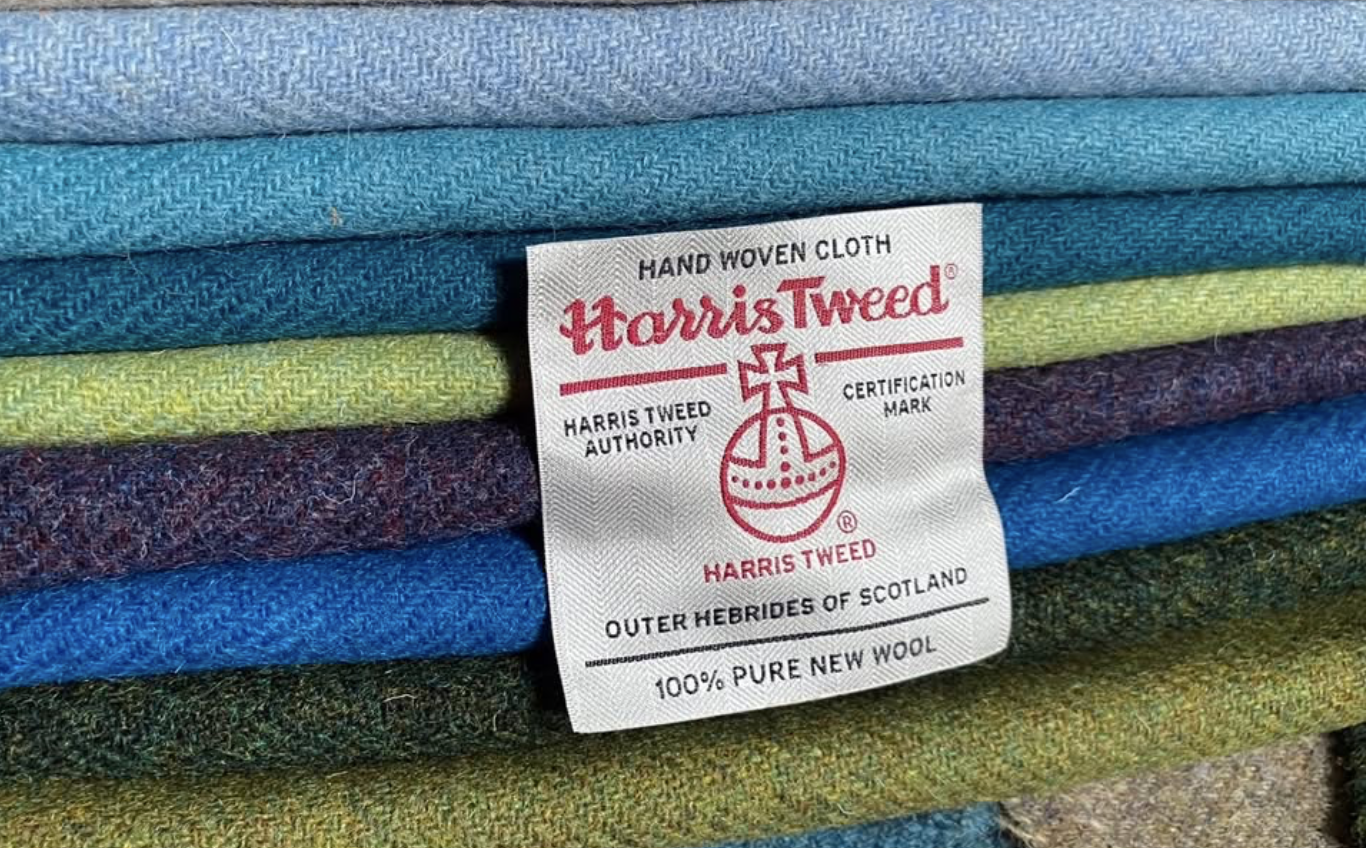
Once the cloth is woven and finished, it is inspected. The Harris Tweed Authority sends inspectors to examine every fifty meters of cloth produced. If the cloth meets the standards required, it is stamped by hand with the Orb Mark, a small globe topped with a Maltese cross. The Orb was granted in 1910 and is generally considered the first trademark of its kind for cloth anywhere in the world.
Every genuine piece of Harris Tweed carries this Orb, either on the fabric itself or on the label of the finished garment. It is the guarantee that the cloth meets the definition set out in the Act of Parliament, and it is the reason clients can commission a Harris Tweed sport coat with the confidence that the fabric is exactly what it claims to be.
What Harris Tweed Feels Like
Reading about Harris Tweed is one thing. Handling the cloth is another. Harris Tweed has a specific character that distinguishes it from other tweeds and from woven wool cloth in general.
It has weight. Harris Tweed is a substantial fabric, historically heavier than most modern shirting or suiting cloths. This weight gives it structure and warmth, and it also gives it a certain presence in the finished garment. A Harris Tweed jacket feels like something.
It has texture. The fabric is not smooth. The individual yarns are visible in the weave, and the colors created by pre-dyed wool blending produce a surface that reads as complex and layered rather than flat and uniform. This visual complexity is part of what makes Harris Tweed such a distinctive cloth for sport coats.
It has durability. Harris Tweed was originally produced to be worn by working islanders in demanding conditions. That practical origin is still evident in the fabric. A well-made Harris Tweed jacket will last for decades of regular wear, softening rather than wearing out, and often becoming a favorite garment across many years.
How to Wear It
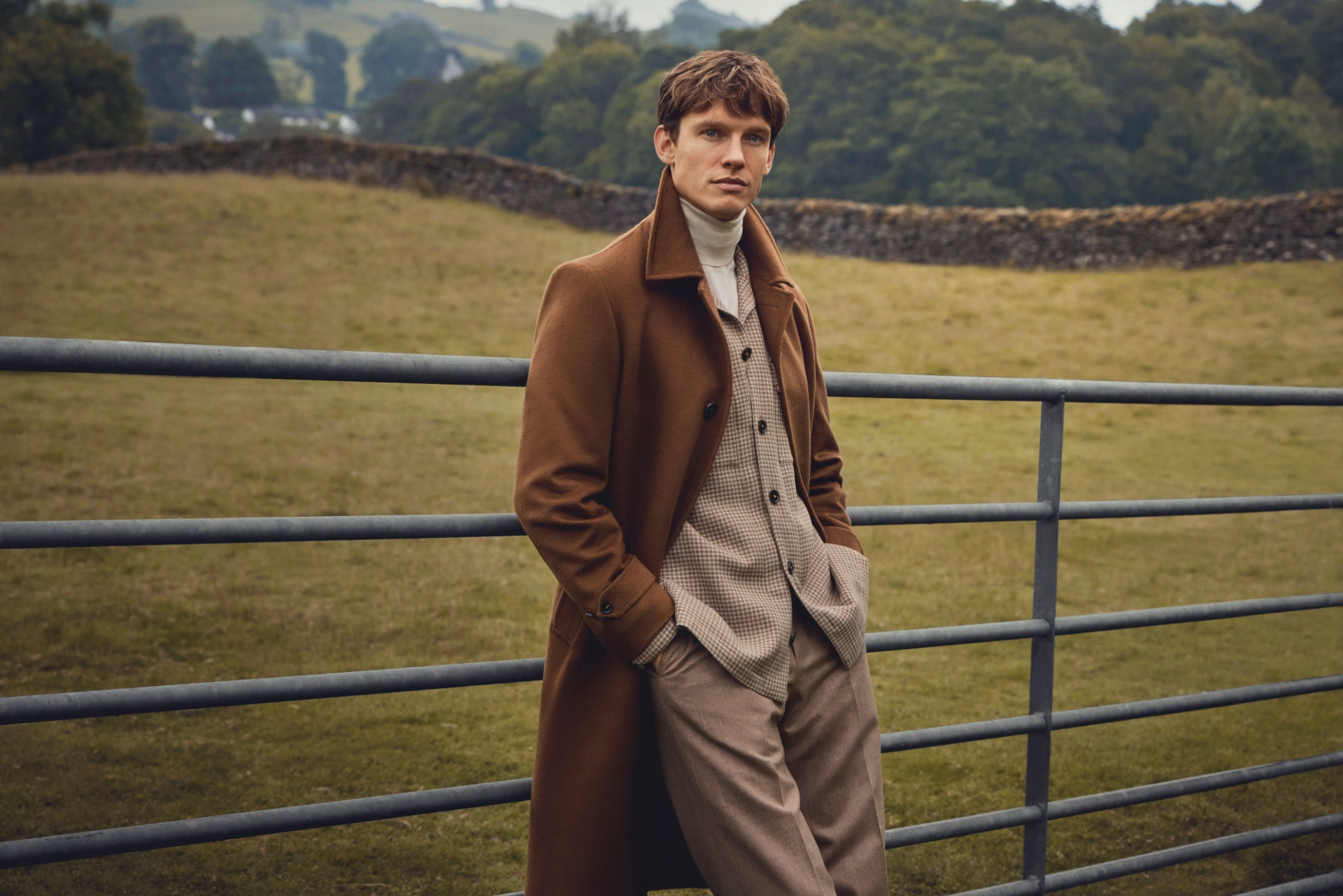
Harris Tweed is not a business suit fabric. It is a sport coat cloth, an outerwear cloth, and a jacket cloth. In its traditional role, it is worn with odd trousers, a soft shirt, and often a knit tie or an open collar. It reads as country rather than corporate, considered rather than formal.
For clients whose wardrobes lean toward sport coats rather than full suits, a Harris Tweed jacket is one of the most rewarding fall commissions available. It can be worn casually with wool trousers and a knit shirt for weekend gatherings, or dressed up slightly with a fine shirt and a tie for less formal business occasions. It works particularly well in the cooler months, where its weight and warmth become genuine assets.
For clients who own multiple sport coats, a Harris Tweed jacket brings something to the wardrobe that other fabrics cannot. Its distinctive texture and character give it a personality that stands apart from smooth worsted or finer tweeds, and it becomes the piece you reach for when you want your outerwear to have specific character rather than blend in.
Coming In to See It
Harris Tweed is one of the fabrics that rewards seeing in person. The colors are more complex than photographs can capture. The hand of the cloth is different from smoother fabrics in ways that only become clear when you touch it. And the connection between the fabric and its origin, once you know the story, adds a dimension that no online description can quite convey.
If you are thinking about a fall sport coat commission, or simply want to experience one of the most storied fabrics in the entire textile world, we welcome the visit. Harris Tweed is available in the showroom, and we are always glad to walk clients through what makes it distinctive. Appointments are available at our Shadyside showroom.
Samuel Baron Clothiers is a bespoke men's clothier located at 201 South Highland Avenue in Shadyside, Pittsburgh, PA. Appointments are required. Call (412) 441-1144 or visit samuelbaronclothiers.com to book.