Suit Alterations Explained (What Can Be Altered—and What Can’t)
A suit isn’t a static purchase—it’s a living part of your wardrobe.
Over time, weight changes, posture changes, and taste changes. The suit you bought five years ago may still be beautiful, but the way you wear clothing—and the way you want to look—may have evolved. Sometimes the goal isn’t to “fix” a suit. It’s to update it so it reflects your current life.
Tailoring can often restore balance and improve comfort. But it’s equally important to know when alterations will compromise the garment. In those cases, the right solution is not forcing a suit into shape—it’s recreating it properly, with the correct proportions from the start.
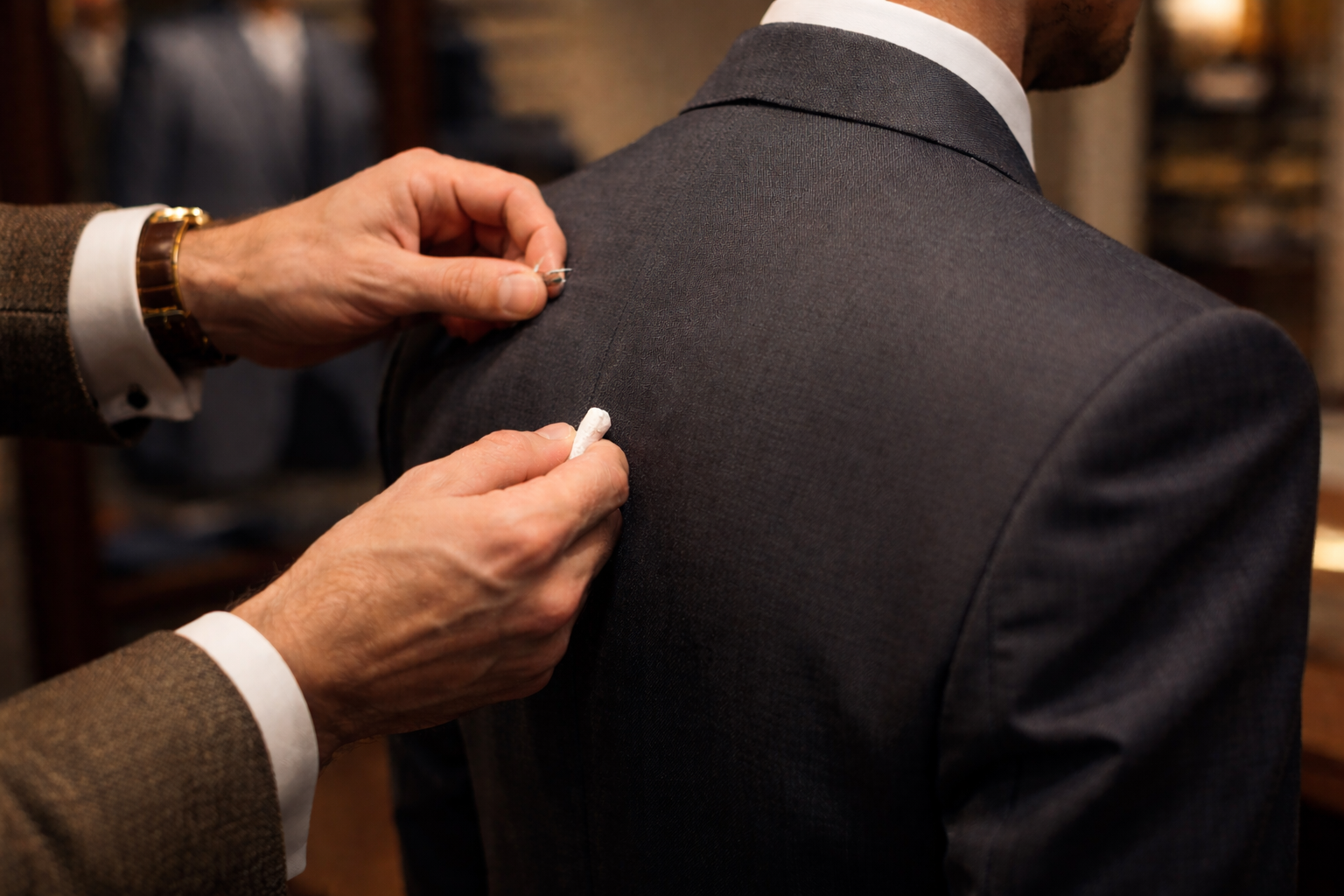
At Samuel Baron Clothiers, alterations are sometimes part of the refinement process for the garments we create for our clients—ensuring each piece fits correctly as it’s completed. While this guide explains what is generally possible in suit tailoring, the best results come from a garment built correctly from the beginning and refined through proper fittings.
Start Here: Alterations vs. Reconstruction (There’s a Difference)
Most suit tailoring falls into two categories: alterations and reconstruction.
Alterations
These are refinements—adjustments that improve fit without changing the underlying structure of the garment.
Jacket Alterations
- sleeve length
- bringing in the jacket waist (or letting it out, when possible)
- small adjustments through the body
- limited sleeve refinement (depending on construction)
- minor collar work (case-by-case)
Trouser Alterations
- trouser hem
- tapering the leg (or letting it out, when possible)
- adjusting the waist (in or out, depending on seam allowance)
- limited seat refinement
Alterations are the most common — and when done correctly, they deliver the biggest visual improvement with the least disruption.
Reconstruction
This is structural work—more involved adjustments that require dismantling and rebuilding parts of the garment. It can be done in certain cases, but it is more complex, more expensive, and not always worthwhile depending on the suit.
Jacket Reconstruction
- shoulder work
- chest reshaping
- raising armholes
- correcting jacket balance (how it hangs front-to-back)
- significant length changes
Trouser Reconstruction
- major resizing beyond available seam allowance
- extensive reshaping that affects pocket placement
- deep structural changes (rare and generally avoidable)
In most cases, trousers are straightforward to refine. Jackets are where the real structural limitations exist.
The Easy Wins (Alterations That Almost Always Help)
These are the adjustments we recommend most often because they deliver the biggest visual payoff—and improve comfort immediately.
1) Trouser Hem
Trousers should break cleanly over the shoe — not puddle.
Common options:
- no break: modern, sharp
- slight break: classic and versatile
- medium break: traditional, more relaxed
A simple hem adjustment changes the entire silhouette.
2) Adjusting the Trouser Waist (One of the Easiest Fixes)
If trousers feel uncomfortable, gap at the back, or require a belt to stay in place, the waist is often the simplest and most effective adjustment.
What taking in the trouser waist does
- eliminates gaping at the waistband
- improves comfort and structure
- keeps the trousers sitting correctly throughout the day
- reduces reliance on a belt
What letting out the trouser waist does (when possible)
- relieves tightness when seated
- prevents strain across the closure
- improves comfort through the hips and seat
- restores a clean drape across the front
Important note: letting out depends on available seam allowance (inlay). A clothier can assess what’s possible quickly.
3) Refining the Trouser Leg (Tapering — or Letting It Out)
Trouser fit is one of the fastest ways to modernize—or quietly ruin—a suit. If the leg is too wide, the entire silhouette can look dated. If it’s too tight, the trousers can pull, cling, and lose their clean line when you move.
What tapering the trouser leg does
- creates a cleaner, sharper silhouette
- removes excess fabric through the thigh, knee, or calf
- helps the trousers sit correctly over the shoe
- modernizes the look without changing the suit’s formality
What letting out the trouser leg does (when possible)
- improves comfort through the thigh or calf
- reduces pulling and wrinkling caused by tension
- restores a clean drape, especially when walking or seated
- prevents the trousers from clinging or “riding up”
Important note: letting out depends on seam allowance. Some trousers allow minor releases; others do not.
Done correctly, trouser refinement should look intentional and feel effortless—no tightness, no excess fabric, and no strain through movement.
4) Sleeve Length
A jacket sleeve that is too long instantly makes a suit look borrowed.
The ideal: show ¼–½ inch of shirt cuff.
Common fix: shorten sleeves to the correct break point.
5) Bringing In — or Letting Out — the Jacket Waist
If a jacket feels boxy or shapeless, adjusting the waist is often one of the most effective ways to improve the silhouette. Just as often, a jacket may fit well in the shoulders and chest but feel too tight through the middle, especially when buttoned or seated.
What bringing in the jacket waist does
- defines the torso cleanly
- removes excess fabric through the midsection
- creates a sharper, more intentional silhouette
- improves how the jacket looks in motion
What letting out the jacket waist does
- relieves tension across the buttoning point
- improves comfort when seated
- prevents pulling, gaping, and distortion through the front
- restores a clean drape so the jacket hangs correctly
Important note: letting out depends on available seam allowance (inlay). A skilled clothier can assess this quickly and advise what’s possible without compromising the jacket’s balance.
Done properly, a waist adjustment should look natural—never forced—and it should feel comfortable whether the jacket is open or buttoned.
When Alterations Aren’t the Answer (And What to Do Instead)
Not every suit can be successfully altered. When a garment is the wrong size, the wrong pattern, or structurally off, tailoring becomes rescue work—and the results rarely look natural.
Common signs a suit may not be worth altering
- the shoulders extend past your natural shoulder line
- the collar collapses or the jacket falls away from the neck
- the jacket is several sizes too large (or too tight)
- armholes are too low and restrict movement
- significant reshaping would distort pocket placement, balance, or button stance
When this happens, we guide clients toward a better solution: recreating the garment correctly—with the right proportions, fabric, and structure from the beginning. The goal is not to force a suit into shape; it’s to build the right garment so it looks effortless and feels correct again.
In other words: rather than offering standalone alteration consultations, we guide clients toward recreating the garment properly when the fit or structure requires it.
Alterations That Are Difficult (Or Often Not Worth It)
1) Shoulders
Shoulders are the foundation of the jacket. Altering them requires dismantling and rebuilding major parts of the garment, and the results can be unpredictable.
If the shoulders are wrong:
it’s often better to choose a different jacket size — or recreate the garment properly from the start.
2) Jacket Length
Shortening a jacket is possible in limited cases — but significant changes can distort pocket placement, button stance, and overall balance.
Length is a design proportion. Altering it too much can make a suit look “modified” rather than naturally correct.
3) Armholes
Raising armholes for better mobility is technically possible, but it’s advanced reconstruction. If mobility is a consistent problem, it’s best addressed at the pattern stage rather than attempting a rescue alteration.
The Most Important Rule: Start With the Right Foundation
Tailoring can refine a suit. It cannot change what the suit fundamentally is.
The strongest results come when:
- shoulders and chest are correct
- jacket length is proportional
- trousers sit comfortably through the seat
- tailoring is used for refinement, not rescue
That’s how you achieve a suit that looks intentional—not simply adjusted.
Next Steps
If a garment no longer fits correctly—or no longer reflects how you want to dress—there are times when alterations simply aren’t the right answer. When that happens, our team is here to help you recreate the piece properly, with the correct proportions, fabric, and structure from the beginning.
We invite you to schedule a consultation at Samuel Baron Clothiers to discuss commissioning a new garment that reflects your current fit, preferences, and lifestyle.