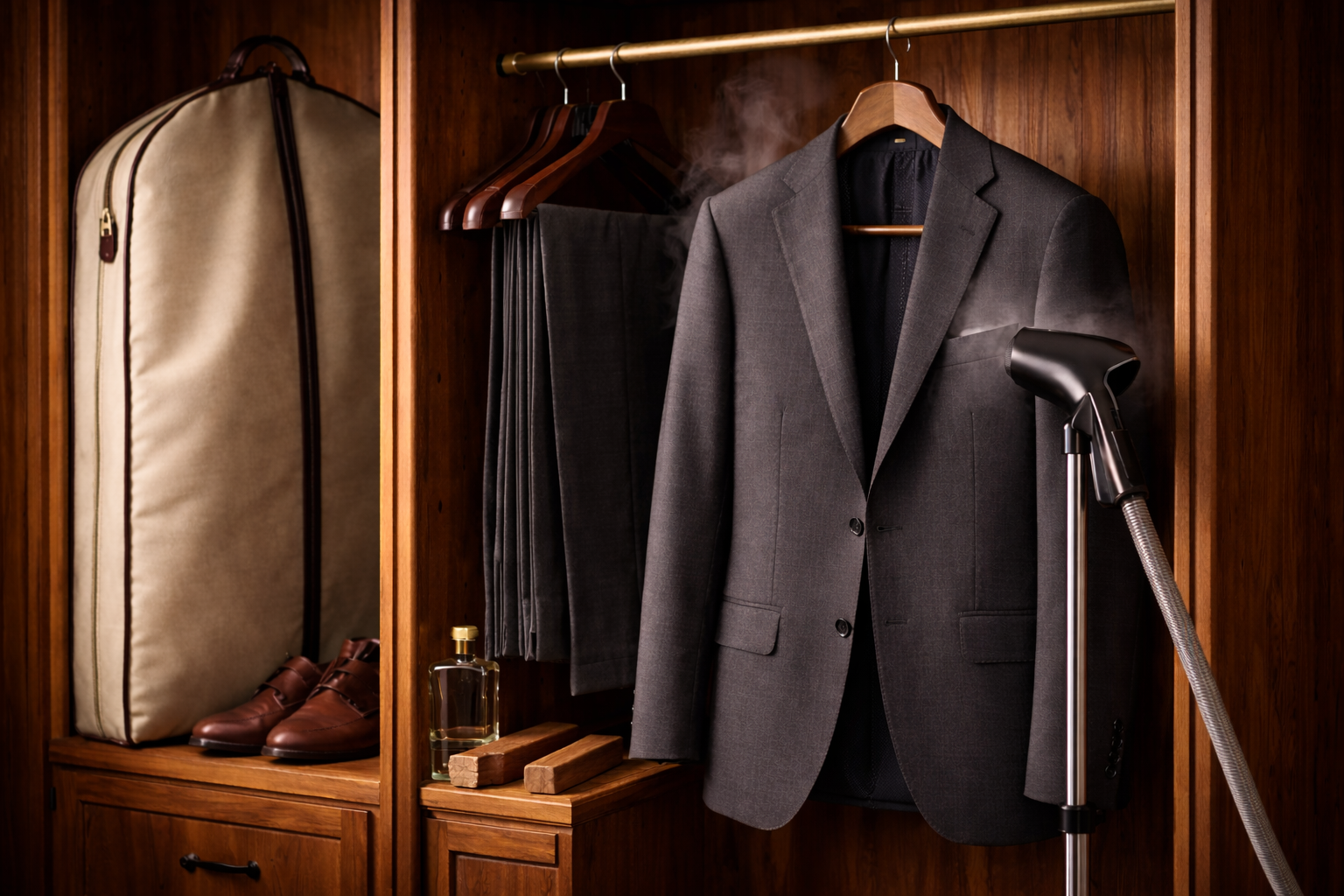
How to Care for a Suit (Dry Cleaning, Storage, Steam, and Travel)
A well-made suit is built to last—but only if it’s cared for properly.
In our showroom, we often meet men who have invested in quality tailoring, only to shorten the life of their wardrobe through common habits: over-dry-cleaning, improper storage, cheap hangers, and rushed travel packing.
Wool and other fine fibers behave differently than casual clothing. They need air, rest, and shape support. The upside is that with a few simple rules, your suits won’t just last longer—they’ll maintain their drape, press cleaner, and look composed for years.
Below is the care system we recommend to clients who want their wardrobe to stay sharp season after season.
1) Dry Cleaning: Less Than You Think (And Only When Necessary)
Dry cleaning is useful—but it isn’t gentle. The solvents and mechanical action can gradually strip natural oils and weaken fibers. A suit that’s dry cleaned too often can lose softness, color depth, and structure.
How often should you dry clean a suit?
- Every 6–10 wears for most suits
- Only when visibly stained or holding odor
- After heavy perspiration or exposure to smoke
The rule is simple: dry clean when you need it—not because it’s been a while.
What to do instead
- brush the suit after wear
- steam lightly to release wrinkles
- air it out on a proper hanger for 24 hours
2) Steaming vs. Ironing (The Rule That Saves Your Fabric)
In most cases, steaming is the better choice for suits.
Why steaming works
Steaming relaxes the fiber and releases wrinkles without flattening the fabric or creating shine. It’s especially important for darker suits, where ironing can leave a glossy imprint—particularly along seams and lapels.
When ironing becomes risky
An iron can be useful on trousers (when done correctly), but on jackets it often:
- crushes texture
- creates shine
- flattens lapel roll
- leaves “press marks” along edges
How to steam a suit properly
In our experience, a few details make the difference:
- Hang the jacket on a wide wooden hanger
- Keep the steamer head just off the fabric, not grinding into it
- Work top to bottom, allowing gravity to help
- Let it dry and settle for 10–15 minutes before wearing
If you’re steaming before an event, do it early—not five minutes before leaving the house.
3) Brush and Air: The Two Most Underrated Habits
Most people jump directly to cleaning and skip the real daily care.
Brushing
A suit brush removes surface dust, lint, and particles that degrade fibers. It’s one of the easiest ways to extend the life of a suit—especially in winter when coats and scarves shed.
Airing
Wool needs rest. After wearing a suit:
- hang it in open air for several hours
- avoid stuffing it back into a tight closet immediately
- allow moisture from the day to dissipate
4) Storage: The Right Hanger Matters More Than You Think
If you do one thing for your suits, do this: upgrade your hangers.
Best hangers for suit jackets
- wide shoulder support
- contoured shape
- sturdy wood construction
Thin wire hangers distort shoulder structure over time. That distortion affects how the jacket drapes—and once the shoulder shape is compromised, it rarely looks right again.
Trouser storage
Trousers should be:
- hung from a bar with a clean crease
- or folded neatly over a trouser hanger
- allowed to rest between wears
5) Garment Bags: Useful for Travel, Not Daily Storage
A garment bag is valuable—just not as a permanent home.
Use garment bags for:
- travel
- seasonal storage (short periods)
- protecting a suit during transport
Avoid storing suits long-term in garment bags because:
- they restrict airflow
- trapped moisture can lead to odor
- fabric benefits from breathing space
If you need long-term storage, use a breathable cover or closet space with airflow.
6) Travel Rules (So Your Suit Arrives Ready to Wear)
Travel is where most suits are damaged—not by use, but by packing mistakes.
For short trips:
- use a garment bag
- hang the suit upon arrival
- steam lightly and let it rest
For packing inside luggage:
- fold the jacket carefully (shoulders inward)
- place it on top of everything
- avoid heavy pressure on lapels and chest
The most important habit: unpack immediately and hang properly. A suit left folded overnight loses its shape fast.
7) The Rotation Rule: Don’t Wear the Same Suit Two Days in a Row
A suit should rest between wears. Wool fibers recover, and the garment holds its structure longer.
If you wear suits regularly, the simplest longevity upgrade is owning enough pieces to rotate:
- 2–3 suits for frequent wear
- 1–2 sport coats for variety
- trousers that can be alternated
This keeps each garment looking newer, longer.
If you’d like guidance on maintaining your wardrobe—or you’re building a suit rotation that fits your lifestyle—we invite you to schedule a consultation at Samuel Baron Clothiers. Our team can help you select the right fabrics, care tools, and wardrobe structure so your clothing holds its shape and elegance for years.