The 5 Essential Dress Shoes Every Man Should Own (And When to Wear Them)
A suit can be flawless, but the wrong shoes will quietly undermine the entire look.
In our showroom, we often tell clients: shoes are not a detail — they’re a conclusion. They finish the outfit. They also signal standards. A well-made suit paired with worn-out or mismatched footwear reads as incomplete, no matter how good the tailoring is.
The good news is you don’t need a closet full of shoes. What you need is a small rotation that covers every setting: business, business casual, weddings, evenings, and travel.
Below are the five essential dress shoes we recommend most often — along with when to wear each, how to pair them, and what they communicate.
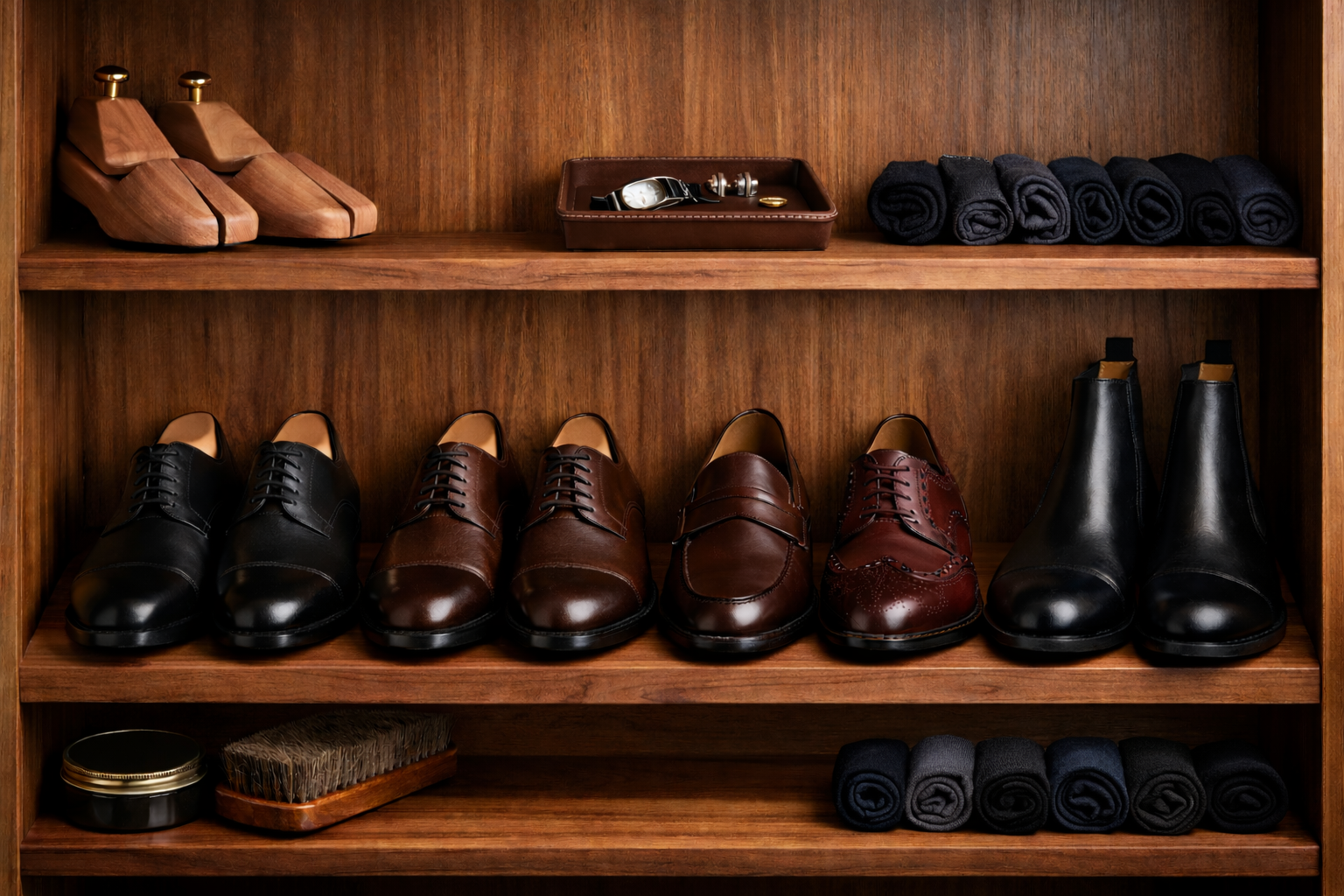
1) Black Cap-Toe Oxford (The Non-Negotiable)
What it is
A closed-lacing dress shoe with a stitched cap across the toe.
When to wear it
- business professional environments
- interviews
- formal weddings
- evening events (when black tie isn’t required)
- any occasion where you want to look sharp and correct
Why it matters
If you own one dress shoe, it should be this. It is the most formal and universally appropriate option, and it pairs cleanly with:
- charcoal suits
- navy suits
- black formalwear (when needed)
Style note
Choose a sleek shape with minimal detailing. This shoe should never compete with the suit — it should support it.
2) Dark Brown Oxford (The Modern Workhorse)
What it is
A closed-lacing oxford in dark brown (espresso or chocolate).
When to wear it
- business environments where brown is acceptable
- client meetings
- navy suits and jackets
- most weddings
- travel and long workdays
Why it matters
Dark brown is often the most versatile shoe for modern wardrobes because it dresses up nearly as well as black but feels slightly more approachable.
It pairs especially well with:
- navy suits
- mid-gray suits
- sport coats and trousers
Team note: In many professional settings today, dark brown is the most-worn shoe in a refined rotation because it handles both business and business casual without missing a step.
3) Dark Brown Loafer (The Polished Business Casual Staple)
What it is
A slip-on shoe with a clean profile — ideally a penny loafer or a minimal tassel loafer.
When to wear it
- business casual offices
- travel
- smart dinners
- spring and summer weddings
- sport coat + trouser combinations
Why it matters
A loafer makes an outfit feel confident and intentional — relaxed, but still elevated. It’s one of the best shoes for men who want to look refined without looking overly formal.
It pairs beautifully with:
- blazers
- sport coats
- gray, khaki, and brown trousers
- lightweight suits
4) Brogue or Derby (The Textured Option for Depth)
What it is
A derby (open-lacing) or brogue with light decorative perforation — not overly ornate.
When to wear it
- business casual settings
- fall and winter wardrobes
- sport coats and textured suits
- casual weddings
- denim + tailored jacket combinations
Why it matters
This shoe adds texture and interest, especially when your clothing leans minimal. It’s also excellent for colder months when heavier fabrics (tweed, flannel, textured wool) feel appropriate.
Style note
Keep the details controlled. Heavy wingtip brogues can look too casual or costume-like. The goal is depth — not noise.
5) A Dress Boot (The Winter and Travel Essential)
What it is
A sleek boot that pairs with tailoring — either a Chelsea boot or a clean lace-up boot in black or dark brown.
When to wear it
- winter weather
- travel days
- city walking
- business casual outfits
- sport coats and trousers
Why it matters
This is the shoe that keeps you polished in real life — when sidewalks are wet, travel is involved, and you still want to look correct.
A well-cut dress boot works with:
- trousers and sport coats
- textured suits
- denim + blazer combinations
Team note: A sharp boot is one of the quickest upgrades a man can make for winter. It solves the practicality problem without sacrificing elegance.
The Two Most Important Shoe Rules (That Fix 90% of Mistakes)
Rule #1: Match your shoe formality to your suit
A sleek oxford belongs with a suit. A textured brogue belongs with a sport coat. A loafer belongs with business casual.
Rule #2: Rotate your shoes
Wearing the same pair every day ruins them quickly. A rotation keeps shoes dry, clean, and structured — and it keeps your presentation consistently polished.
How to Keep Dress Shoes Looking Sharp
A few small habits go a long way:
- use shoe trees after wear
- wipe shoes down after city walking
- polish lightly every few wears (more often in winter)
- resole before damage becomes permanent
Shoes should age with grace — not collapse with neglect.
Next Steps
If you’d like help building a shoe rotation that works with your wardrobe — or pairing footwear correctly with suits, jackets, and trousers — we invite you to schedule a consultation at Samuel Baron Clothiers. Our team will guide you through cohesive wardrobe choices so every outfit feels intentional from head to toe.
Read More
Continue building a wardrobe that fits correctly and looks composed in every setting:
- The Office Capsule Wardrobe (12 Pieces, Endless Outfits)
- Blazer vs Suit vs Sport Coat (The Shortcut Rule That Makes It Easy)
- How to Care for a Suit (Dry Cleaning, Storage, Steam, and Travel)