There are a handful of garments in the history of menswear that have fallen almost entirely out of circulation, only to quietly return in the hands of men who understand what they are. The smoking jacket is one of them. For most of the twentieth century, it was the garment of a specific kind of gentleman and a specific kind of evening. For a long stretch of the late twentieth and early twenty-first century, it was almost forgotten. Today, it is enjoying a slow and considered return among clients who appreciate what it offers that no other garment quite can.
For the man who hosts winter dinners at home, who attends holiday gatherings where the dress code allows for something distinctive, or who simply wants a garment that reads as elegance at ease, the smoking jacket is worth knowing about. This is a look at what it is, where it came from, and the modern case for owning one.
What a Smoking Jacket Actually Is
A smoking jacket is a specific garment with specific features. In its classical form, it is a mid-weight jacket with a shawl collar in silk or satin, often made from velvet or a figured silk, closed either with silk-covered buttons, a sash belt tied at the waist, or in some versions with no closure at all. The length typically falls to the hip, in line with a traditional suit jacket. The sleeves are standard length. The interior is lined, often in silk or a soft silk alternative.
The visual effect is distinctly different from either a suit jacket or a tuxedo. The smoking jacket reads as a garment of leisure, not of formality. It carries the richness of its fabric and the softness of its construction. It is designed to be worn comfortably across a long evening, in a home or a quiet venue, with the particular ease that defines the garment's entire character.
Where It Came From
The smoking jacket emerged in Victorian England as a solution to a specific problem. Gentlemen of the era frequently smoked cigars and pipes after dinner, and the smoke permeated whatever clothing was being worn. For a man who had just dressed for a formal evening, this was a serious inconvenience. The solution was a specific garment reserved for the smoking room, changed into after dinner, that could absorb the smoke without affecting the rest of the wardrobe.
The smoking jacket, often in velvet or heavy silk, was that garment. The fabrics were chosen partly because they absorbed smoke well and partly because they could be aired and brushed clean more easily than the fine wools of a dinner jacket. The design, with its shawl collar and soft construction, was comfortable to wear across long evening hours. By the late nineteenth century, the smoking jacket had become a fixed element of English and European gentlemanly dress.
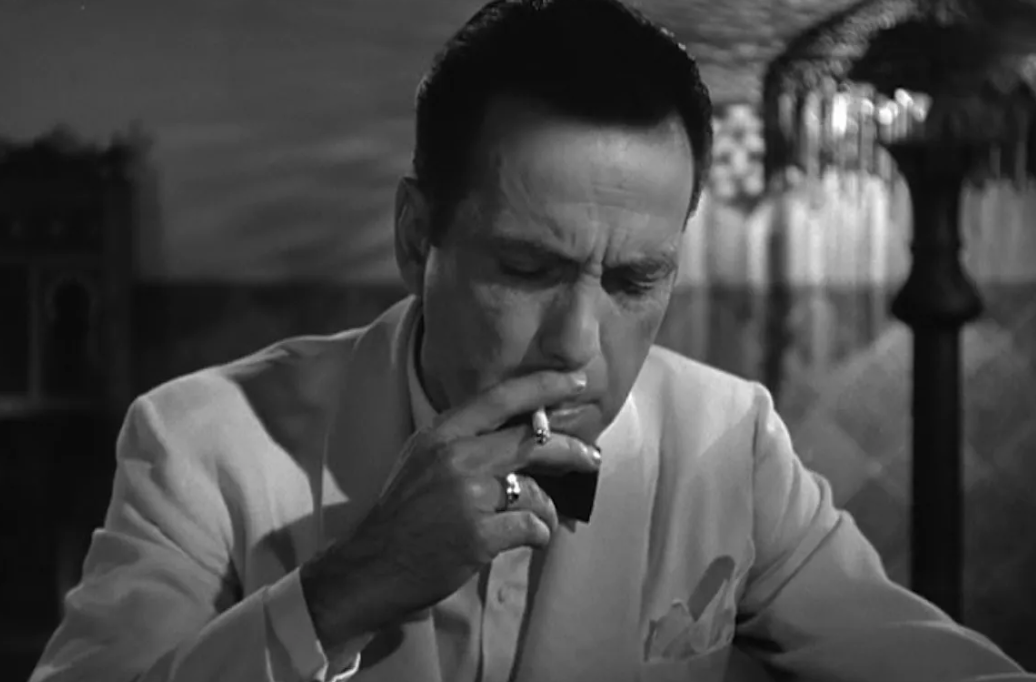
Over the course of the twentieth century, the specific ritual of adjourning to a smoking room after dinner faded, but the garment itself persisted. It evolved into a broader category of elegant evening wear worn at home, at private dinners, and in less formal black tie contexts. By the mid-twentieth century, figures like Cary Grant, Fred Astaire, and the Duke of Windsor had all made the smoking jacket part of the vocabulary of a well-dressed man's evening wardrobe.
How It Differs from a Tuxedo
The relationship between the smoking jacket and the tuxedo is sometimes confused. The two are related in origin but distinct in use. The tuxedo, as we have written about elsewhere, is a specific category of formalwear worn to black tie events outside the home. The smoking jacket, by contrast, is a garment of relaxed elegance worn primarily at home or in private contexts.
The construction reflects this. A tuxedo is built with the structure of a proper suit jacket, with canvas, shoulder construction, and the formality that defines evening wear. A smoking jacket is softer, often unstructured, with the drape and ease of a garment meant for comfort rather than public ceremony. The fabrics also differ. A tuxedo is wool. A smoking jacket is velvet or silk.
For clients who already own a tuxedo and are wondering whether a smoking jacket adds something, the answer is that it occupies a completely different register. The tuxedo is for black tie events outside the home. The smoking jacket is for the evenings in between.
The Modern Case for Owning One
The smoking jacket is a specific commission, and it is not for everyone. For clients whose lifestyles include certain kinds of evenings, however, it is one of the most quietly rewarding garments available to commission.
For Hosting at Home
The strongest practical case for a smoking jacket is for the man who hosts dinners at home. There is a specific pleasure in greeting your guests, pouring drinks, and moving through the evening in a garment that reads as considered without being formal. The smoking jacket signals that you have put thought into the evening without putting your guests at the wrong end of a wardrobe gap. It is the garment of a man who understands that hosting well includes dressing well, but who also understands that the register of the host is distinct from the register of the guest.
For holiday dinners in particular, when the setting is often more intimate and the atmosphere more significant, a smoking jacket brings a specific quality to the evening that no other garment can quite match.
For Holiday Season Occasions
Beyond hosting, the smoking jacket has a place at certain holiday season events. Private dinner parties at friends' homes. Smaller gatherings where the dress code calls for something more than a sport coat but less than a tuxedo. The holiday open house. The intimate New Year's gathering. For any of these, a well-cut smoking jacket worn with simple black trousers, a soft shirt, and polished shoes is a statement of elegant intention.
The garment is also appropriate for certain less-formal black tie contexts. A black tie optional holiday party. A charity gala where the invitation leaves room for personal interpretation. A dinner at a club or restaurant where the room will skew formal but not strict black tie. In each of these, a smoking jacket offers a distinct alternative to the standard tuxedo without compromising the level of consideration the occasion deserves.
For Winter Evenings in General
Beyond specific events, the smoking jacket has a role in the broader winter wardrobe for clients who appreciate the particular pleasure of dressing well for a quiet evening at home. A glass of good scotch in front of the fire. A long evening of conversation. A late-night reading session. These are the moments the smoking jacket was designed for, and the clients who own one tend to reach for it far more often than they expected to when they commissioned it.
Fabrics Worth Considering
The classical smoking jacket fabrics are specific, and each one carries its own character.
Velvet
Velvet is the classical smoking jacket fabric. Cotton velvet, silk velvet, or wool velvet all work beautifully. The specific pile of velvet absorbs light in a way that gives the fabric remarkable depth and richness, particularly under the warm, low light of a winter evening. A deep burgundy velvet, a forest green, a midnight blue, or a true black are all classical choices. Each one photographs beautifully and carries the specific presence that velvet alone provides.
For a first smoking jacket, cotton or wool velvet is often the practical starting point. Silk velvet is extraordinary but more delicate and more specialized.
Figured Silk and Brocade
Patterned silks, including brocades and jacquards, carry a different kind of character than velvet. The patterns can be subtle, like a tonal paisley in a deep color, or more pronounced, like a figured brocade in a complex design. Silk smoking jackets read as slightly more festive and slightly more decorative than velvet, and they are particularly well suited to clients who want a distinctive garment for the holiday season.
Soft Wool
A soft wool smoking jacket, often in a cashmere or wool-cashmere blend, provides a slightly more restrained alternative to velvet or silk. The fabric reads as warm and considered without the overt luxury of velvet. For clients who want the smoking jacket silhouette and the smoking jacket ease without the specific visual drama of velvet or silk, soft wool is often the right answer.
How to Wear It
The smoking jacket is traditionally worn with specific accompanying garments. The classical combination is simple black trousers (often with a silk stripe down the outseam, as on tuxedo trousers), a white or cream dress shirt (often with a soft collar), and polished leather slippers or evening shoes. A silk pocket square completes the look. A bow tie is traditional but optional; many modern smoking jacket wearers skip the tie entirely in favor of an open collar.
The garment is almost never worn outside the home or private venue. It is specifically a garment of interior spaces, which is part of what gives it its distinctive character. Wearing it to an event where it would be seen in public (unless the context explicitly calls for it) misses the point of the garment.
Why Commission One
For clients who have the formal end of the wardrobe sorted and are looking for a distinctive commission that adds something genuinely different, a smoking jacket is one of the more rewarding options available. It is specific, personal, and used for occasions that happen with meaningful regularity across the winter months.
A custom smoking jacket allows for all the specific choices the garment calls for. The exact velvet or silk. The specific color. The shawl collar's precise shape and depth. The buttons or sash closure. The lining, which on a smoking jacket is particularly visible as the garment moves and tends to be chosen with special attention.
For the holiday season approaching, this is also one of the few bespoke commissions that can genuinely transform a client's evening wardrobe without displacing anything already in it. The smoking jacket does not replace the tuxedo. It does not replace the business suit. It adds something new, in a register that no other garment occupies.
A Final Thought
The smoking jacket is a garment of a specific sensibility. The client who commissions one is the client who understands that elegance can be enjoyed in private as well as displayed in public, and who takes genuine pleasure in dressing well for the evenings that matter most. For that client, the smoking jacket is one of the most satisfying garments a wardrobe can include.
If you would like to talk through what a smoking jacket commission might look like, including fabric selection and the specific choices that make the garment personal, we welcome the conversation. Appointments are available at our Shadyside showroom.
Samuel Baron Clothiers is a bespoke men's clothier located at 201 South Highland Avenue in Shadyside, Pittsburgh, PA. Appointments are required. Call (412) 441-1144 or visit samuelbaronclothiers.com to book.