Spring has a way of making people want to start over.
The weather shifts, heavier fabrics begin to feel out of place, and suddenly the temptation is to buy an entirely new wardrobe in the name of the season. In practice, that is rarely necessary. A strong spring wardrobe is not built through volume. It is built through adjustment.
The most effective spring rotation does not require more clothing. It requires better balance. Fabric weight lightens. Color becomes more responsive to daylight. Texture becomes more visible. The wardrobe opens up, but it should still feel anchored by the same principles that make tailored clothing work in the first place: proportion, versatility, and discipline.
Overbuying usually happens when seasonal dressing is treated like novelty instead of refinement. The goal of a spring rotation is not to own as much spring clothing as possible. It is to have the right pieces, in the right fabrics, that work together consistently.
What a Spring Rotation Should Actually Do
A seasonal wardrobe should make dressing easier, not more complicated. When a spring rotation is built correctly, it allows the same few garments to move across different situations without feeling repetitive. A jacket should work for business lunches, dinners, and travel. Trousers should pair naturally with multiple shirts and sport coats. Shirts should support both suits and separates.
That is where many wardrobes go wrong. Pieces are bought individually, often because they feel seasonal or visually appealing in the moment, but they are not considered as part of a larger system. The result is a closet that looks full but dresses inconsistently.
A proper spring rotation should feel coherent. That does not mean minimal in a stark or rigid sense. It means intentional. Every addition should widen the usefulness of the wardrobe rather than narrow it.
Start with Fabric, Not Color
Most people begin seasonal shopping by thinking about color, but spring wardrobes are better built from fabric outward.
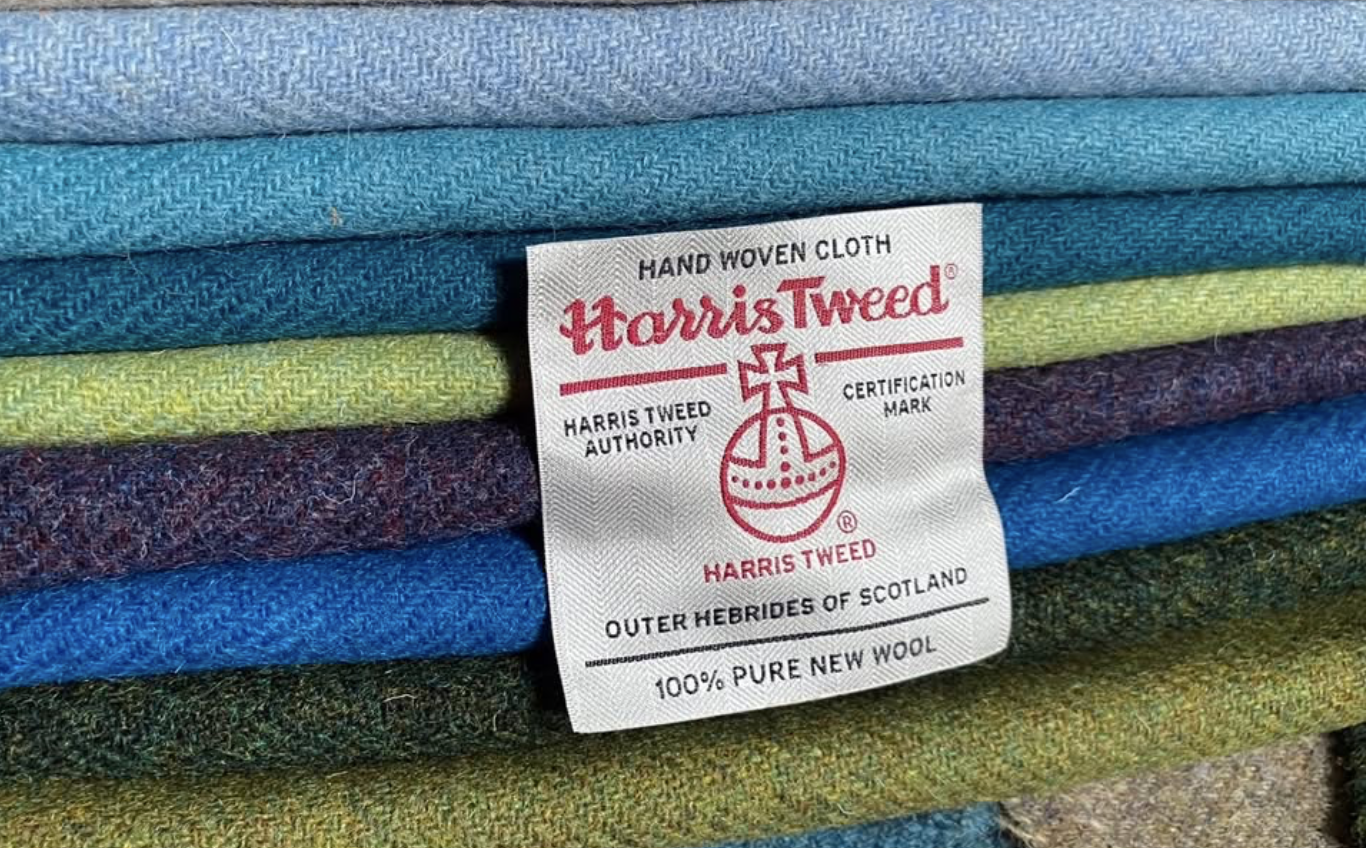
The first real shift into spring is not that clothing becomes brighter. It is that cloth becomes lighter and more breathable. Winter flannels, dense worsteds, and heavy overcoats give way to lighter wools, open weaves, soft cottons, wool-silk blends, and sport coat fabrics that carry texture without bulk.
That transition alone changes how the wardrobe feels. A navy jacket in a spring weight hopsack behaves very differently from a navy jacket in a denser winter cloth. A pair of gray trousers cut in a lighter worsted immediately broadens what can be worn around it. When fabric is chosen well, the entire wardrobe begins to read as seasonal without forcing the point.
This is why spring wardrobes do not need dramatic expansion. A small shift in weight and texture often does more than a large shift in volume.
The Case for Fewer, Better Anchors
Most well-built spring wardrobes need fewer anchor pieces than people assume.
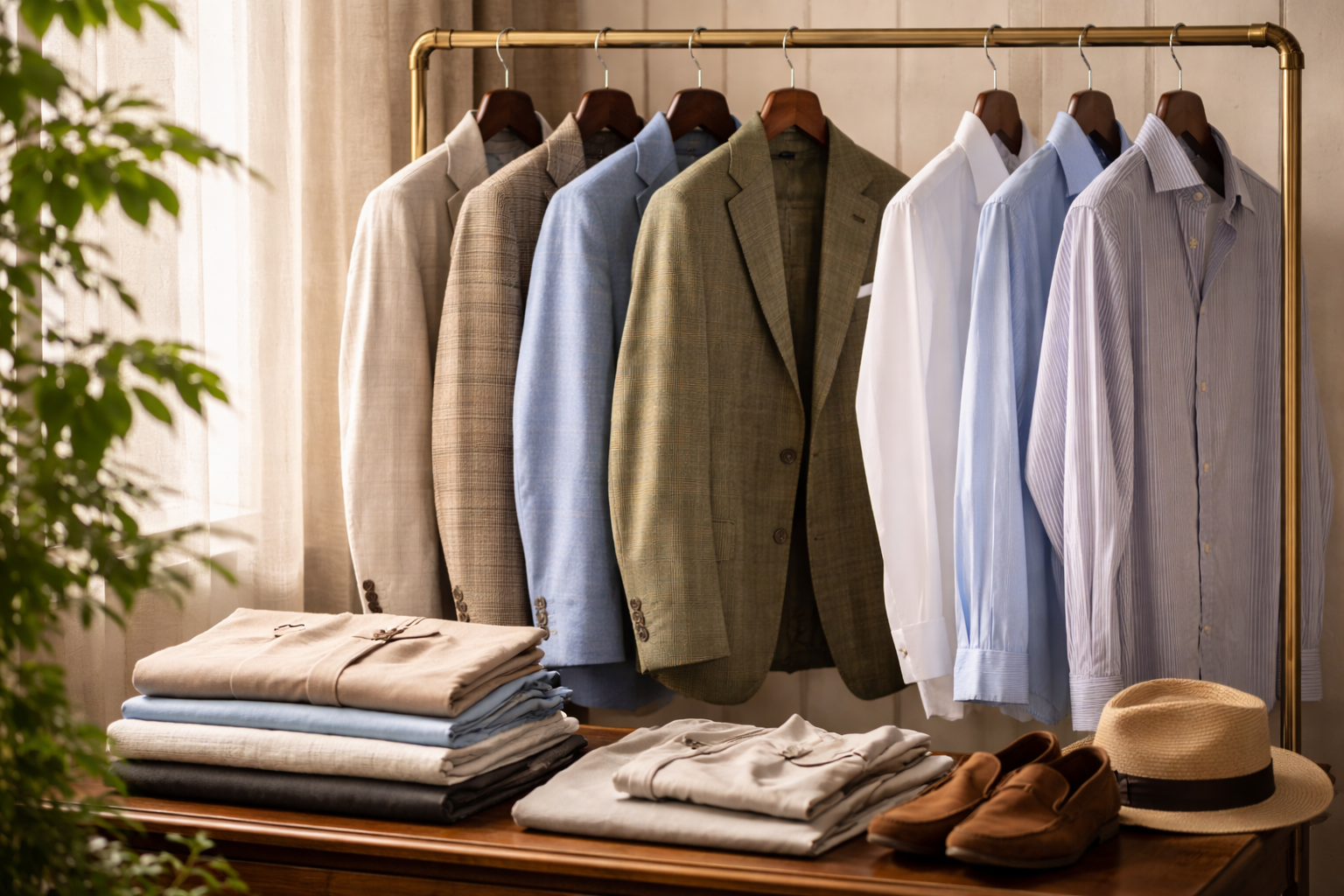
A strong navy sport coat, a lighter gray trouser, a brown or taupe jacket, and a small group of shirts in white, soft blue, and subtle pattern can take a wardrobe surprisingly far. Add one or two proper seasonal suits, and the foundation is already there.
The value of anchor pieces lies in repetition. These are the garments that should be worn often, not preserved as special occasion pieces. They work because they support multiple combinations without looking identical each time.
A spring rotation should never feel crowded with one-purpose garments. If a piece only works with one shirt, one trouser, or one specific scenario, it may be interesting, but it is not necessarily useful.
The wardrobe becomes stronger when each new piece multiplies the value of what is already there.
Where Overbuying Usually Happens
Overbuying tends to happen in the same places every season.
It shows up in novelty jackets that feel fresh for two weeks and then become difficult to wear. It shows up in multiple versions of essentially the same trouser. It shows up in shirts that are bought for color alone, without regard for how they interact with jackets and suits already in the closet.
Spring also invites overbuying because the season feels optimistic. Lighter tones, more visible texture, and softer tailoring all create the illusion that more variety is needed. In reality, spring dressing often works best when the range is narrowed and refined rather than expanded recklessly.
The smartest wardrobes do not chase variety for its own sake. They create distinction through cloth, texture, and proportion rather than constant visual change.
Color Should Expand Gradually
Spring does invite more flexibility in color, but that expansion should happen gradually.
Navy remains essential. Gray remains useful. Brown becomes more important. Soft blue, stone, cream, olive, and muted taupe begin to feel more natural as daylight strengthens. These tones work because they introduce seasonal warmth without abandoning the discipline of a tailored wardrobe.
What matters is how color is layered into the rotation. A spring wardrobe does not need to announce the season through obvious brightness. In most cases, the most elegant seasonal shifts happen through softened neutrals, lighter shirting, and jackets whose texture catches light differently than winter cloth.
This approach also prevents fatigue. A wardrobe built around subtle seasonal color changes will still feel current months later. One built around impulse purchases tends to date itself much faster.
The Role of the Sport Coat in a Spring Wardrobe
If there is one garment that proves how unnecessary overbuying can be, it is the sport coat.
A well-chosen spring sport coat can do the work of several less-considered purchases. It can be worn with gray trousers, cream trousers, refined denim, or seasonal wool trousers. It can sit over an open-collar shirt for a more relaxed setting, or over shirt and tie for something more formal. It carries structure, but not rigidity. That is exactly what spring wardrobes need.
Because of this, building a stronger spring rotation often means buying fewer jackets, but buying better ones. A sport coat in the right fabric and tone can hold a season together far more effectively than several trend-driven alternatives.
Why a Rotation Matters More Than Quantity
The idea of a wardrobe rotation is ultimately about rhythm. Clothing should work with the pace of your life.
A proper spring rotation allows you to move through a week, or even a season, without feeling that you are reaching for the same exact combination every time. It creates flexibility through coordination, not accumulation. That distinction matters.
A full closet can still produce repetitive dressing if the garments are too narrow in their usefulness. A disciplined closet can feel expansive when the pieces speak to one another correctly.
That is why the best spring wardrobes do not look overbuilt. They look calm. Deliberate. Edited.
The Takeaway
Building a spring rotation without overbuying requires restraint, but not austerity. It is not about having less for the sake of having less. It is about choosing garments that carry more responsibility within the wardrobe.
Start with fabric. Strengthen the anchor pieces. Let color widen gradually. Prioritize garments that combine easily and wear often. When those principles are in place, the wardrobe does not need to grow dramatically to feel new.
Spring dressing should feel lighter, more open, and more flexible. It should not feel cluttered.
That is the difference between seasonal shopping and wardrobe strategy.
A More Intentional Wardrobe Starts Here
A strong seasonal wardrobe is built through thoughtful choices in fabric, proportion, and versatility. If you are refining your spring rotation and want guidance on what to add, what to replace, and what to leave alone, we invite you to begin the conversation.
https://www.samuelbaronclothiers.com/contact