Learn how to spot a truly high-quality suit—canvas construction, stitching, balance, and details most men never notice. From a Pittsburgh bespoke clothier.
The Hidden Markers of a High-Quality Suit (What Most Men Never Notice)
Luxury is not loud. In tailoring, true quality reveals itself quietly—in the structure you can’t see, the precision you can feel, and the balance that makes a suit look effortless from every angle.
Most men judge a suit by fabric and fit alone. Those matter, of course. But when you step into the world of bespoke tailoring, you learn the truth: two suits can look similar on a hanger and perform completely differently in real life.
At Samuel Baron Clothiers, we offer bespoke production, and we train our clients to recognize what separates an ordinary suit from a garment designed to last and improve with time.
Below are the hidden markers of quality that matter most—especially if you want a suit that maintains its elegance through years of wear in Pittsburgh’s business, wedding, and formal environments.
1. Canvas: The Suit’s Architecture (And the Biggest Difference)
If you want to understand suit quality in one lesson, understand this:
A suit is only as good as what’s underneath it.
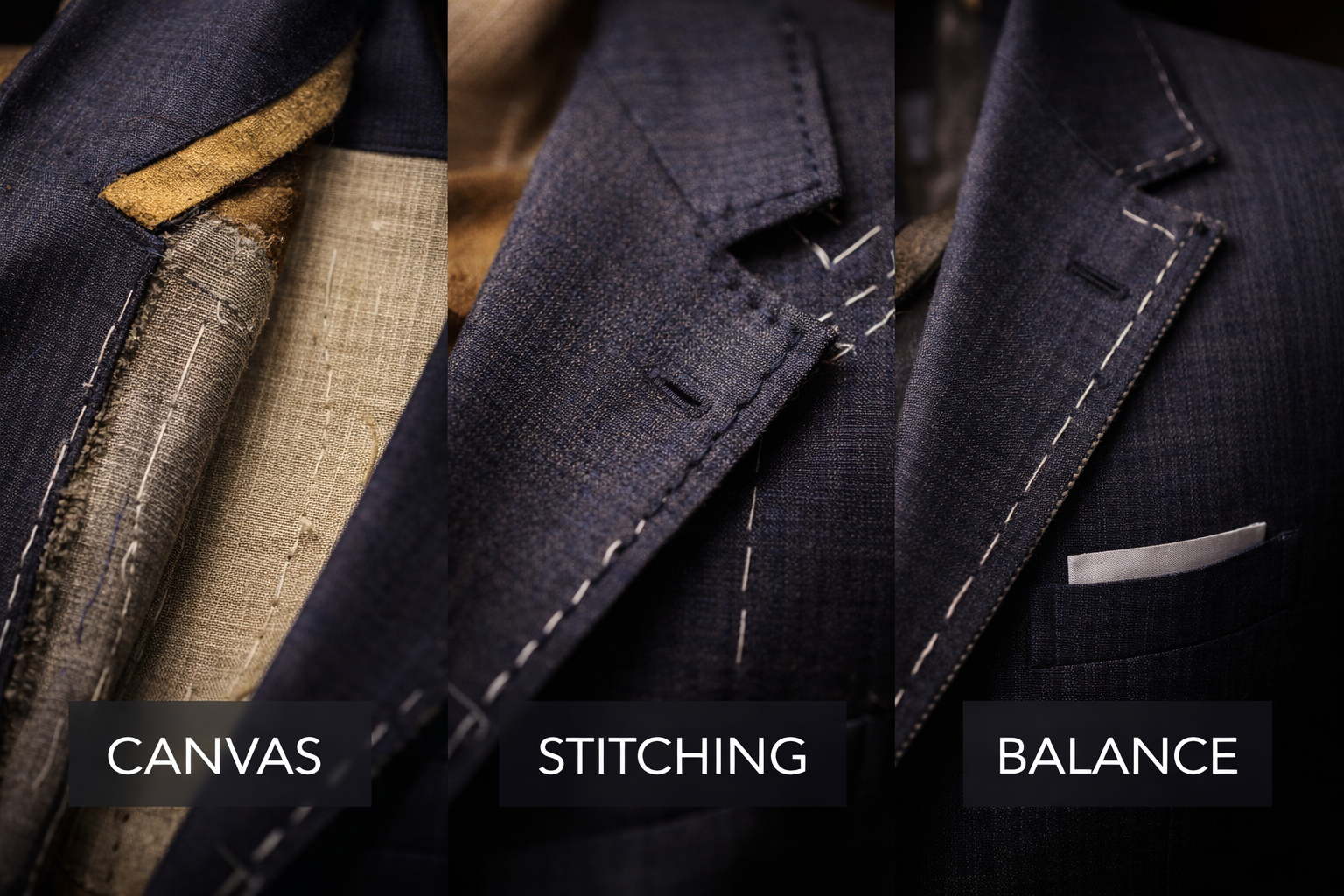
Inside a well-made jacket lives a structured foundation called the canvas—typically a blend of horsehair and natural fibers that gives the chest and lapel its shape.
Full canvas vs. fused
- Full canvas: runs through the chest and down the front of the jacket
- Half canvas: covers the chest and lapel but not the full length
- Fused: uses glue to bond fabric to an interlining (the most common in mass retail)
A fused suit can look acceptable when new. The problem is time and heat: the glue often breaks down, leading to bubbling, stiffness, and a lifeless drape.
A canvassed suit—especially in bespoke production—molds to your shape over time, creating a jacket that looks better the more you wear it.
What quality canvas gives you:
- a lapel that rolls naturally
- a chest that holds shape cleanly
- a jacket that moves with you, not against you
- longevity—years, not seasons
2. Lapel Roll: The Sign of a Suit That Has Been Built, Not Manufactured
One of the quickest tells in tailoring is the lapel.
A low-quality suit has lapels that fold sharply as if pressed into submission.
A high-quality suit has lapels that roll softly from the chest. This roll is not simply steamed in; it comes from the canvas, handwork, and the way the lapel is shaped during construction.
In bespoke garments, this creates the “quiet elegance” that draws the eye without ever appearing forced.
3. Stitching: Consistency, Restraint, and Precision
Most clients notice stitching only when it is obvious. In luxury tailoring, stitching is meant to be controlled and intentional.
Look for:
- clean, even seams
- consistent stitch length
- smooth finishing inside the jacket
- hand-finishing where it matters (collar, buttonholes, lapel shaping)
One common misconception: visible pick stitching automatically equals quality. In reality, it’s not about visibility—it’s about execution.
In bespoke production, stitching is an expression of craftsmanship, not decoration.
4. Balance: The Detail That Makes a Suit Look Expensive (Even From Across the Room)
Balance is what separates a suit that “fits” from a suit that looks exceptional.
A jacket may technically be the correct size, but if it isn’t balanced to your posture, it will:
- pull forward
- collapse at the collar
- create wrinkles in the back
- sit unevenly at the hem
A well-balanced suit hangs cleanly from the neck and shoulder. It drapes naturally over the chest. It remains composed even when you move.
In bespoke tailoring, balance is refined not only through measurement, but through fittings and observation—how you stand, how you walk, and how the garment behaves on your frame.
This is why bespoke garments have a presence that off-the-rack suits cannot replicate.
5. The Small Details That Signal Serious Craftsmanship
High-quality tailoring is full of small decisions that most men never notice—but they feel the difference immediately.
Quality markers include:
- proper armhole height (for movement without lifting the jacket)
- clean sleeve pitch (so the sleeve hangs naturally at rest)
- pattern matching (especially in checks and stripes)
- finished buttonholes and consistent button placement
- lining that lies flat and doesn’t strain
When you add these details together, the result is a suit that appears effortless—and lasts.
6. The Truth: Great Suits Are Designed to Age Well
Fast fashion and department store suiting is built to look good briefly.
Bespoke tailoring is built to look better over time.
A suit made with proper canvas and craftsmanship:
- molds to the wearer
- maintains its silhouette
- can be altered as your body changes
- holds meaning as part of your wardrobe story
This is why bespoke is not simply an expense—it is a form of investment in personal presentation.
If you’re considering a tailored wardrobe upgrade—or you simply want to understand what true bespoke quality looks like—we invite you to schedule a consultation at Samuel Baron Clothiers in Pittsburgh.
We’ll show you the internal structure, walk you through construction, and help you build garments that reflect your standards.