There is a kind of well-dressed man who stands out without ever appearing to try. The suit is well cut. The shirt is right. But the thing that separates him from a room full of equally tailored peers is usually somewhere small. The pocket square folded with the right amount of carelessness. The tie that picks up a single shade from the cloth. The summer accessories that read as intentional rather than fussy.
Accessories are where a tailored wardrobe becomes personal. They are also, more often than not, where men either elevate their dressing or undermine it. Done well, they transform an outfit. Done badly, they become costume. The difference is almost always a matter of restraint and proportion.
This guide covers the accessories that matter most in summer, what each one does, and how to think about choosing them without overthinking the result.
Why Accessories Matter More in Summer
Winter dressing has built-in interest. Heavier fabrics, deeper colors, textured layers — there is visual richness in a winter wardrobe that does not require additional embellishment to feel complete. Summer dressing is the opposite. The fabrics are lighter, the colors are paler, and the silhouettes are simpler. A well-cut summer suit can read as elegant but can also read as flat without something to anchor it visually.
This is where accessories do their work. A pocket square introduces color and texture exactly where the eye lands. A tie in a seasonal material connects the outfit to the time of year. A small detail of pattern or color can take an otherwise quiet summer look and give it the quiet authority that distinguishes the well-dressed from the merely well-tailored.
The Pocket Square
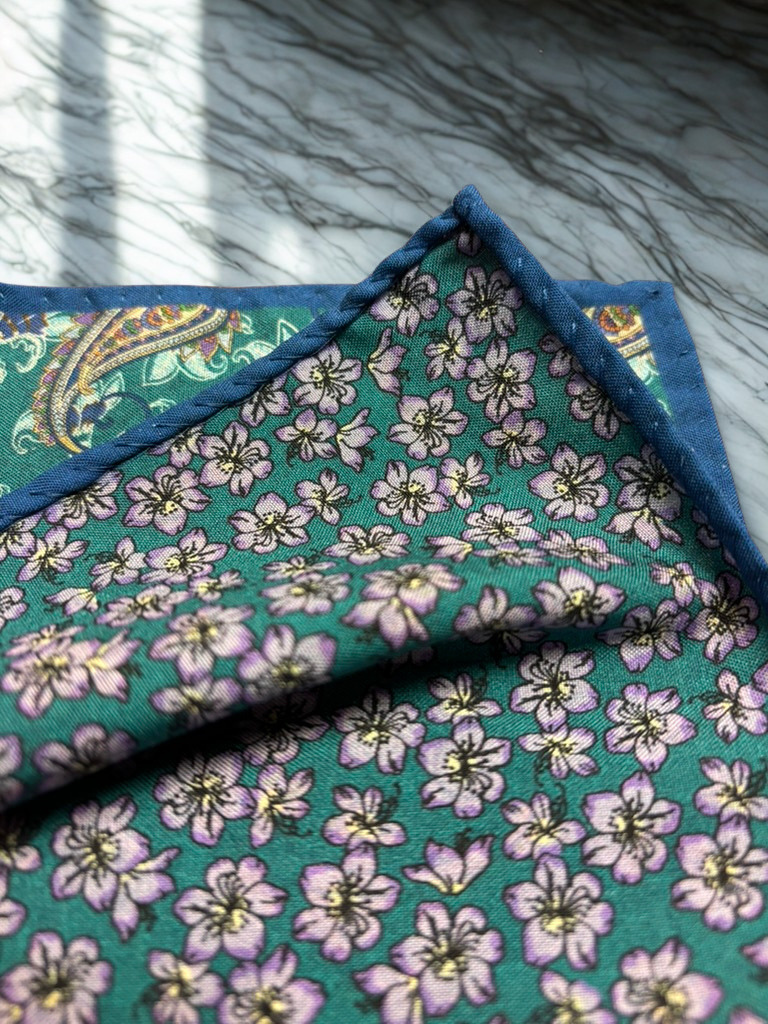
The pocket square is the most underused accessory in a man's wardrobe, and the one with the highest potential return for the effort involved. A good pocket square costs relatively little, takes seconds to put in place, and changes the read of a suit immediately. There is almost no other accessory with that ratio of investment to result.
Choosing the Right Pocket Square for Summer
In summer, the rules are simpler than they appear. Lighter fabrics work better than heavy ones. Linen is particularly summer-appropriate, with a slightly matte finish and a casual quality that suits warm-weather dressing. Silk has its place as well, especially for more formal occasions, though heavy silk can feel out of season in July.
Color should lean lighter or more muted than what works in fall and winter. Soft yellows, sage greens, rust tones, dusty blues, and faded coral all sit naturally in a summer palette. Bright primary colors can work in the right context — a summer wedding, an outdoor cocktail event — but require more confidence to wear well.
The Rule Most Men Get Wrong
The single most common mistake is matching the pocket square exactly to the tie. Pre-packaged sets sold this way exist precisely because most men assume they should match. They should not.
A pocket square works by complementing the outfit, not by coordinating with it. It should share a tone with the tie or the shirt without being identical to either. Picking up a thread of color from the suit, the shirt, or the tie — but not duplicating any of them — is the move that separates intentional dressing from formal-wear-by-the-book.
How to Fold a Pocket Square
There are dozens of named folds, but for practical purposes only a few matter.
The Presidential fold — a flat, straight horizontal line of fabric showing at the top of the pocket — is the most classic and most formal. It works particularly well with a stiffer silk pocket square.
The puff fold is the easiest and the most forgiving. You gather the pocket square loosely in your hand, fold the bottom under itself, and place it in the pocket so the soft fabric blooms slightly at the top. This is the right choice for linen or any softer material, and it has a slight informality that suits summer dressing well.
Beyond those two, there are variations involving multiple visible points or precise crown shapes. They are not necessary. A good pocket square folded simply will always look better than a perfectly executed elaborate fold that draws attention to itself.
The Summer Tie
Ties are seasonal in ways that most men overlook. A heavy silk tie that works perfectly in November can feel oppressive and out of place in July. The fabric weight, the texture, and even the construction of the tie all factor into whether it reads as appropriate to the season.
Summer Tie Materials
Linen ties are the most summer-specific option. They have a slightly textured surface, a casual quality, and a way of softening a formal suit into something more season-appropriate. Linen ties wrinkle, which some clients find off-putting at first, but the wrinkles are part of the character — much the same as with a linen suit. They are not for every occasion, but for summer business and casual social events, they are excellent.
Silk knit ties are perhaps the most versatile summer option. The knitted construction gives them a slight texture and a softer drape than a standard woven silk tie. They work with summer suits, sport coats, and even slightly more casual pairings. A navy or charcoal silk knit tie can carry a professional through the entire summer wardrobe with grace.
Lightweight printed silks also have their place, especially for more polished business occasions. Look for ties that feel softer in the hand and read as less substantial than winter ties of the same material — the difference is real, even if it is subtle.
Pattern and Color for Summer Ties
In summer, smaller patterns generally read better than larger ones. A small dot, a fine stripe, or a tonal grenadine in a slightly lighter color sits well with the lighter palette of summer suiting. Bold patterns can work, but they require the rest of the outfit to remain restrained.
Color should follow the same logic as the pocket square. Slightly softer, slightly lighter, slightly less saturated than what works in cooler months. A burgundy tie that reads as elegant in October can read as heavy in July. A dusty rose or faded burgundy in the same general family will translate better.
Other Summer Accessories Worth Considering
Beyond pocket squares and ties, there are a few additional accessories worth knowing about for summer dressing.
Lapel Flowers and Boutonnières
A simple lapel flower — a small unstructured boutonnière, real or fabric — adds a note of summer ease to a suit or sport coat. It is particularly appropriate for outdoor events, garden parties, and summer weddings. Used sparingly, it reads as romantic and considered. Used too often, it loses its quiet specialness.
Tie Bars
Tie bars hold a tie in place and keep it from swinging or shifting through the day. They also add a small horizontal note to the outfit. For a summer wardrobe, a slim, understated tie bar in silver or muted metal is a small refinement worth considering. The tie bar should not be wider than the tie itself, and it should sit between the third and fourth button of the shirt.
Belts and Shoes
These are not strictly accessories, but they participate in the overall look. In summer, lighter leather tones — tan, mid-brown, burgundy — read more appropriately than the heavy black of formal winter dressing. A lighter brown belt with matching shoes can transform a navy or grey summer suit into something distinctly seasonal.
How to Put It Together
The most useful framework for thinking about accessories is to imagine the outfit in layers of visual weight. The suit and shirt establish the foundation. The tie and pocket square add accents. The smaller details — the tie bar, the lapel flower, the choice of leather — round out the picture.
The goal is balance. If the suit is heavily patterned, the accessories should be quieter. If the suit is solid, the accessories can do more of the work. A loud pocket square with a loud tie and a loud shirt becomes noise; a single bold accessory against an otherwise restrained outfit becomes a point.
And in summer specifically, the goal is to look like you have considered the season without looking like you have tried too hard. Lighter materials. Lighter colors. Slightly softer patterns. The kind of restrained intentionality that reads as effortless even when it is not.
The Custom Difference
Most of the accessories discussed here are available at any reasonable haberdashery, but custom commissions extend to this category as well. At Samuel Baron Clothiers, we work with clients on custom ties and pocket squares in fabrics drawn from our suiting and shirting collections. A pocket square cut from the same Loro Piana wool-silk as your jacket lining. A tie made from a length of cloth you particularly loved during fabric selection. These are small commissions that produce details no one else will have.
If you have been considering how to elevate the wardrobe you already own, accessories are often the place to start. The investment is modest, the result is immediate, and the small details accumulate into something that looks distinctly yours.
If you would like to talk through accessories — what works for your wardrobe, what you might commission, or simply how to wear what you already own — we welcome the conversation. Appointments are available at our Shadyside showroom.
Samuel Baron Clothiers is a bespoke men's clothier located at 201 South Highland Avenue in Shadyside, Pittsburgh, PA. Appointments are required. Call (412) 441-1144 or visit samuelbaronclothiers.com to book.