The suit is often described as one of the most stable garments in a man's wardrobe. In broad terms, that is true. It has been recognizably the same piece of clothing for over a century, worn by professionals, worn to weddings, worn to occasions of every kind. Its basic elements have remained constant: a jacket with lapels, a matching pair of trousers, cut and constructed for tailored wear.
But look closer, and the picture shifts. The suit of the 1950s and the suit of the 1970s are almost different garments. The 1980s power suit bears little resemblance to the slim cut of the 2010s. The current moment, in which classical proportion is quietly returning after two decades of tightness, is itself a distinct chapter. Understanding these shifts is not simply an exercise in fashion history. For clients building a bespoke wardrobe, knowing where the tradition is at any given moment provides useful context for the decisions being made about their own commissions.
This is a decade-by-decade look at how the modern suit has evolved since 1950, and where the current moment sits in the arc.
The 1950s and Early 1960s: Mid-Century Structure
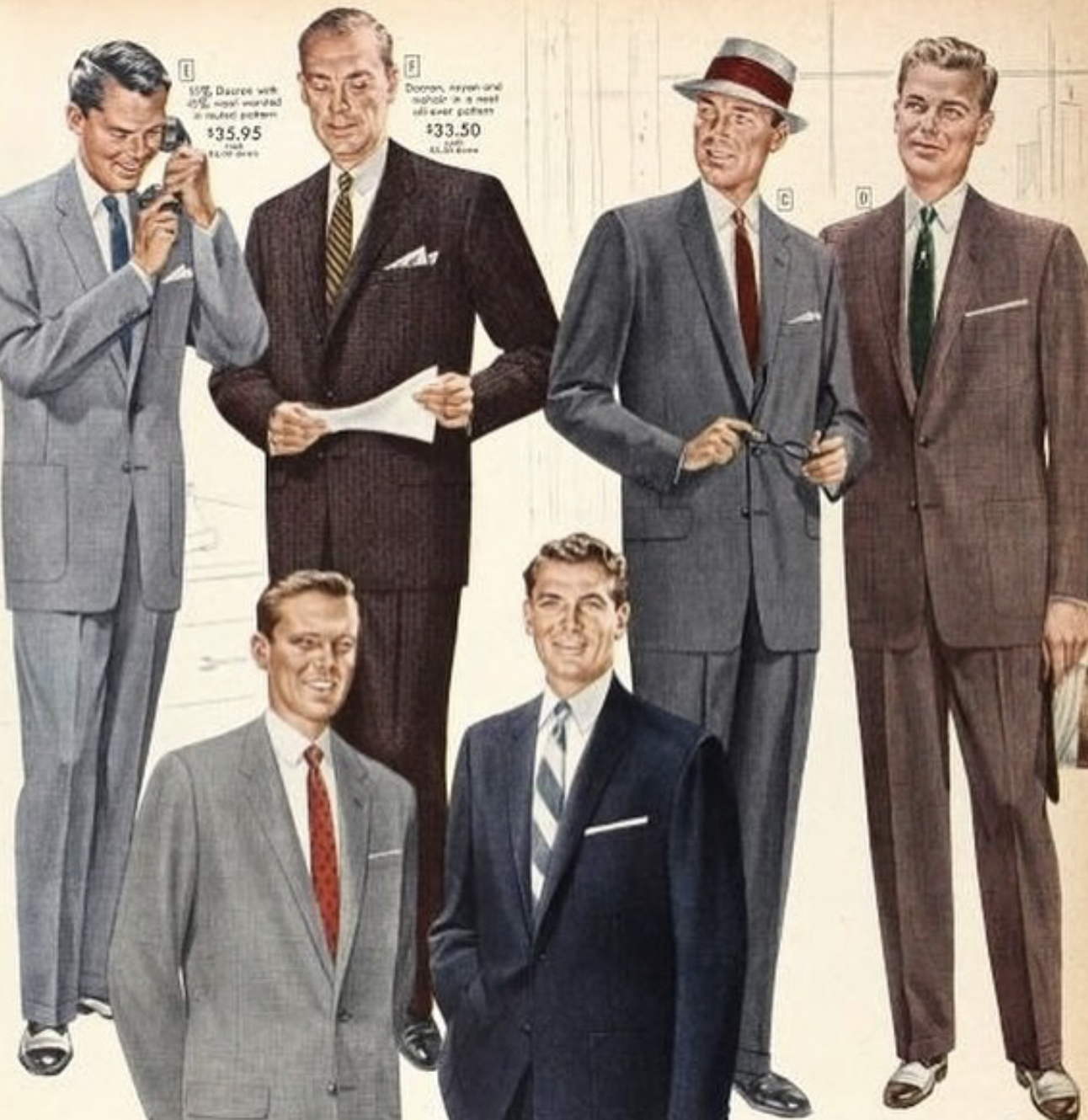
The suit of the mid-twentieth century was defined by structure. Shoulders were built up with padding, giving the wearer a broad, upright presence. Chests were shaped with substantial internal canvas. Lapels sat at a medium width, generally between 3.5 and 4 inches. Trousers were fuller through the leg, high-rise at the waist, and often pleated. The overall silhouette was one of authority and quiet confidence.
This was the era in which the suit reached what many consider its most classical form. The Duke of Windsor, Cary Grant, Sean Connery in the early Bond films — the archetypal well-dressed man of this period wore a suit that was proportioned generously, constructed carefully, and made for an era in which tailored clothing was still the daily wardrobe of professional men. The Ivy League style that emerged in America during the same period offered a slightly softer, more collegiate variation, but the core principles remained: structure, generosity of cut, and refined proportion.
The Late 1960s and 1970s: Wide Silhouettes and Cultural Change
By the late 1960s, the mid-century suit had begun to feel outdated. Cultural change was reshaping menswear alongside everything else, and the tailoring response was dramatic. Lapels widened significantly, sometimes reaching five inches or more. Trousers flared at the leg. Shirt collars grew longer, colors became bolder, and the overall silhouette moved away from the restrained authority of the previous era.
The 1970s suit is often remembered with amusement, and there is some justification for that. Some of the more extreme expressions of the era — heavily patterned polyester suits, exaggerated lapels, disco-adjacent styling — have not aged well. But the core silhouette, particularly in its more considered forms, had its own logic. Fuller cuts allowed movement. Wider lapels balanced the wider shirt collars and neckties of the period. The best bespoke tailoring of the 1970s produced garments that were dramatic without being cartoonish.
It is worth noting that the Italian tailoring tradition, particularly in Milan and Naples, largely resisted the more extreme excesses of this era. What emerged from Italy in the 1970s carried the wider proportions of the moment but tempered them with restraint.
The 1980s: Power and Excess
The 1980s produced what may be the most recognizable suit silhouette of the modern era. Shoulders were built up to their most extreme dimensions, creating a strong horizontal line across the top of the jacket. Lapels remained wide. Trousers were pleated and full through the leg. The overall effect was one of visible power and presence, and it matched the corporate culture of the decade almost too well.
The power suit of the 1980s was a garment of intent. It was designed to communicate authority, ambition, and success. Worn well, it did so effectively. Worn badly, it became a caricature. Both versions were widely visible throughout the decade, and both left a lasting impression on how the suit was understood.
The Italian houses continued to influence the shape of the era, particularly through designers like Giorgio Armani, whose softer, less structured approach offered an alternative to the extreme shoulders and rigid tailoring of the American power suit. This Italian softness would eventually become one of the defining directions of the following decades.
The 1990s: Minimalism and the Return to Restraint
The 1990s represented a broad rejection of 1980s excess. Shoulders softened. Lapels narrowed slightly. Colors became more restrained, with a strong preference for neutral grays and navies. The overall silhouette moved toward something quieter and less visibly aggressive.
The Italian influence became dominant in this decade. Armani's soft, unstructured tailoring shaped both fashion and finance-industry wardrobes. Neapolitan tailoring, with its emphasis on soft shoulders and natural drape, gained international recognition. In New York and London, the corporate suit of the 1990s was cut more gently than its 1980s predecessor, with slightly narrower proportions and less visible padding.
The trousers of the era began to move toward flat fronts and lower rises, a shift that would fully play out in the following decade. The wardrobe as a whole reflected a broader cultural shift toward minimalism and restraint after the excesses of the 1980s.
The 2000s and 2010s: Slim and Sharp
The 2000s and 2010s produced the tightest suit silhouette in modern history. Shoulders were narrow and often deliberately unpadded. Jackets were shortened, sometimes dramatically. Lapels narrowed to around 2.5 or 3 inches. Trousers were cut slim through the leg, low-rise at the waist, and often broke very short at the shoe. The overall silhouette was sharp, close to the body, and unmistakably contemporary.
This era was heavily influenced by fashion houses like Hedi Slimane at Dior Homme, whose ultra-slim tailoring reshaped what men expected from a suit. The trend was aggressive enough that it changed the baseline of what off-the-rack suits looked like across the entire market. For a period of nearly two decades, the slim cut was the default assumption in tailoring.
Whether this silhouette actually served the men wearing it is a separate question. In its most extreme forms, the slim cut required an athletic build to look correct, and even then it often restricted movement. Trousers that broke very short exposed too much sock. Jackets that were cut too short looked strained across the seat. But the aesthetic was dominant enough that these compromises were accepted, and for a long time the slim cut was simply what a modern suit was expected to be.
The Current Moment: A Return to Classical Proportion
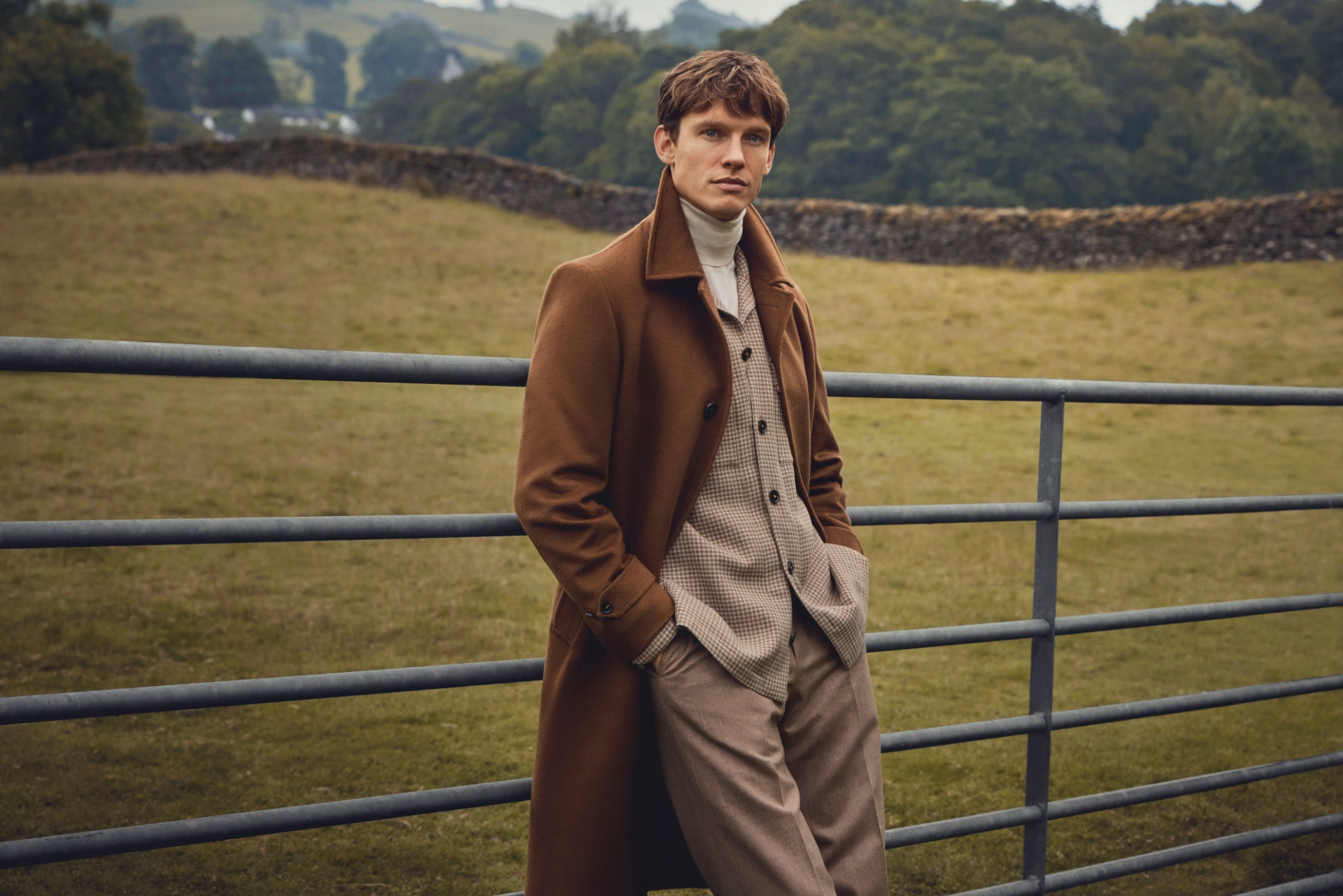
The current moment in tailoring, roughly the last five years, is defined by a broad and welcome rejection of the tightness of the previous era. Shoulders have relaxed. Jackets have grown slightly longer, returning to more traditional proportions. Lapels have widened toward the medium range that has always suited the human body best. Trousers have gained back some room through the leg, and rises have risen back to something closer to natural.
This is not a return to the 1970s or the 1980s. The proportions being adopted now are closer to the mid-century classicism of the 1950s and early 60s, with adjustments that reflect contemporary sensibilities. The result is a suit that reads as fully modern but does not sacrifice comfort or classical proportion in the service of trend.
For clients commissioning bespoke garments today, this is a fortunate moment to be in. The tailoring tradition has returned to proportions that produce the most flattering, longest-wearing suits. A bespoke commission made now can be genuinely classical without reading as dated, and slightly modern without following the sharp trends of the recent past.
What This Means for a Client Today
Understanding the arc of the last seventy years does more than satisfy curiosity. It shapes the decisions worth making about a bespoke commission today.
A suit cut to current proportions will remain flattering and current for longer than one cut to the extremes of any particular decade. The sharp slim cuts of the 2010s already read as dated. The wide silhouettes of the 1970s never fully returned. The classical proportions being adopted now, on the other hand, are the ones that have looked right in every era where they have appeared. They have staying power because they reflect what actually flatters a human body wearing tailored clothing.
This is one of the reasons we favor classical proportion in our own work at Samuel Baron Clothiers. It is not that we are indifferent to what is current — the current moment favors classical proportion, and that is exactly what we recommend to most clients. But we are also mindful that a bespoke commission is a garment that will be worn for a decade or more. The proportions worth choosing are the ones that will still look correct when the current moment has passed and the next chapter of the arc begins.
If you are thinking about your next commission and would like to discuss what proportions might work best for you, we welcome the conversation. Appointments are available at our Shadyside showroom.
Samuel Baron Clothiers is a bespoke men's clothier located at 201 South Highland Avenue in Shadyside, Pittsburgh, PA. Appointments are required. Call (412) 441-1144 or visit samuelbaronclothiers.com to book.