There is a particular skill in menswear that most clients admire the moment they see it done well, but that few can name. It is the ability to wear a jacket and trousers that are not a matching suit, in a way that reads as entirely intentional. Not casual. Not an afterthought. Not simply a sport coat with whatever trouser was closest to the hanger. A deliberate, coordinated pairing of two garments that look as if they were made for each other, even though they were never meant as a set.
The Italians have a word for this, and it is worth knowing. The word is spezzato, from the Italian spezzare, meaning to break or to split. A spezzato is a broken suit, a deliberately mismatched outfit built from pieces that have been chosen to work together. The practice has been a signature of Italian tailoring for the better part of a century, and it is one of the most useful skills a bespoke wardrobe can develop. In fall and winter specifically, when sport coats and odd trousers come into their own, spezzato is the discipline worth learning.
This is a guide to what spezzato is, how it differs from simply wearing a sport coat with odd trousers, and the small rules that separate a successful broken suit from an unsuccessful one.
Where the Tradition Came From
The Italian tradition of the broken suit emerged from a specific cultural tendency. Italian menswear has always leaned slightly more informal than its English counterpart. Where the English approach to tailoring prized matching suits, structured construction, and the formal rituals of city dress, the Italian approach favored softness, ease, and a more playful attitude toward how a well-dressed man might combine his garments.
The broken suit grew naturally from this sensibility. If a jacket could be worn without its matching trousers, and a trouser could be worn without its matching jacket, then a man could expand his wardrobe meaningfully without expanding the number of garments he owned. Two suits became, in effect, four outfits. A single jacket could be paired with multiple trousers for different occasions. The practice was economical, aesthetically interesting, and distinctly Italian.
Over the twentieth century, as Italian menswear gained international influence through houses in Naples, Milan, and Rome, the spezzato became part of the broader language of considered dressing. By the time the modern tailoring moment arrived, it was simply understood that a well-dressed Italian man would mix his jackets and trousers, and that doing it well was a specific skill worth cultivating.
What Spezzato Is Not
Before explaining what makes a spezzato work, it helps to say clearly what spezzato is not. It is not simply wearing a sport coat with whatever trouser happens to be in the closet. It is not grabbing a navy jacket and a pair of grey trousers because they both exist in your wardrobe. It is not an afterthought.
A proper spezzato is a deliberate combination. The jacket and the trouser have been chosen to work together, with specific attention to the relationships between their colors, their textures, their weights, and their formality. Done well, the result looks as if the two garments were conceived as a pair, even though they come from different cloths and different commissions.
This is the distinction worth internalizing. A sport coat and odd trousers is a category of garment. A spezzato is a specific outfit built from garments in that category, with the deliberate care to make the pairing read as whole.
The Rules of a Successful Spezzato
What separates a well-executed spezzato from a merely approximate one is attention to a handful of specific relationships between the jacket and the trouser. Each of these relationships is small on its own. Together they produce the effect of coordination that defines the Italian broken suit at its best.
Contrast in Color, Not Chaos
The first rule is that the colors of the jacket and trouser should contrast meaningfully, but within a coherent palette. A navy jacket with charcoal trousers works. A rust tweed jacket with olive trousers works. A tan sport coat with brown trousers works. In each case, the two colors are distinct enough to read as a deliberate pairing rather than a failed match, but close enough on the color wheel to belong together.
The failures tend to come at the extremes. A jacket and trouser that are too close in color read as a bad attempt at a matching suit, where the near-match looks like an accident rather than a choice. A jacket and trouser that are too far apart in color read as unrelated garments that happen to be worn together. The sweet spot is in the middle, where the contrast is clear and the harmony is also clear.
Relationship in Texture
Texture is where spezzato often becomes most interesting. A smooth jacket in a worsted wool pairs beautifully with a textured trouser in flannel. A tweed jacket pairs with a smooth wool trouser. A soft cashmere jacket pairs with a crisp cotton trouser. The combination of smooth and textured, or of different textures within the same tonal family, gives the outfit depth and visual interest that a matching suit cannot achieve.
The point here is not that the textures should match. It is that they should relate. Two very similar textures in slightly different cloths look accidental. Two different textures in deliberately complementary cloths look considered.
Weight and Season
The jacket and trouser in a spezzato should share the same seasonal weight. A heavy flannel jacket paired with a lightweight tropical wool trouser looks mismatched and uncomfortable. A tweed jacket paired with a linen trouser looks confused. The weights should be appropriate to the same season and the same conditions, even when the cloths themselves differ in other ways.
For fall and winter, this means both the jacket and the trouser should carry the weight the season calls for. Flannel with flannel. Tweed with wool. Cashmere with heavier wool. The specific cloths differ, but the seasonality aligns.
Shared Formality
Finally, the jacket and trouser should operate at the same level of formality. A formal pin-striped business jacket with casual chinos reads as confused. A tweed sport coat with evening wool trousers reads as confused. The jacket and trouser should both suggest the same kind of occasion, even if they come from different pieces of your wardrobe.
Classical Spezzato Pairings
For clients new to the practice, there are a handful of classical pairings that work almost without fail, and that provide a reliable foundation to build from.
A navy jacket with grey trousers is the most versatile and forgiving spezzato pairing in menswear. It works for business, for social occasions, and for virtually any context where tailored clothing is appropriate. If you commission only one spezzato combination, this is the one to start with.
A charcoal jacket with navy trousers reverses the pairing and reads as slightly more formal. This works beautifully for professional contexts where you want tailored clothing but do not need the full formality of a matching suit.
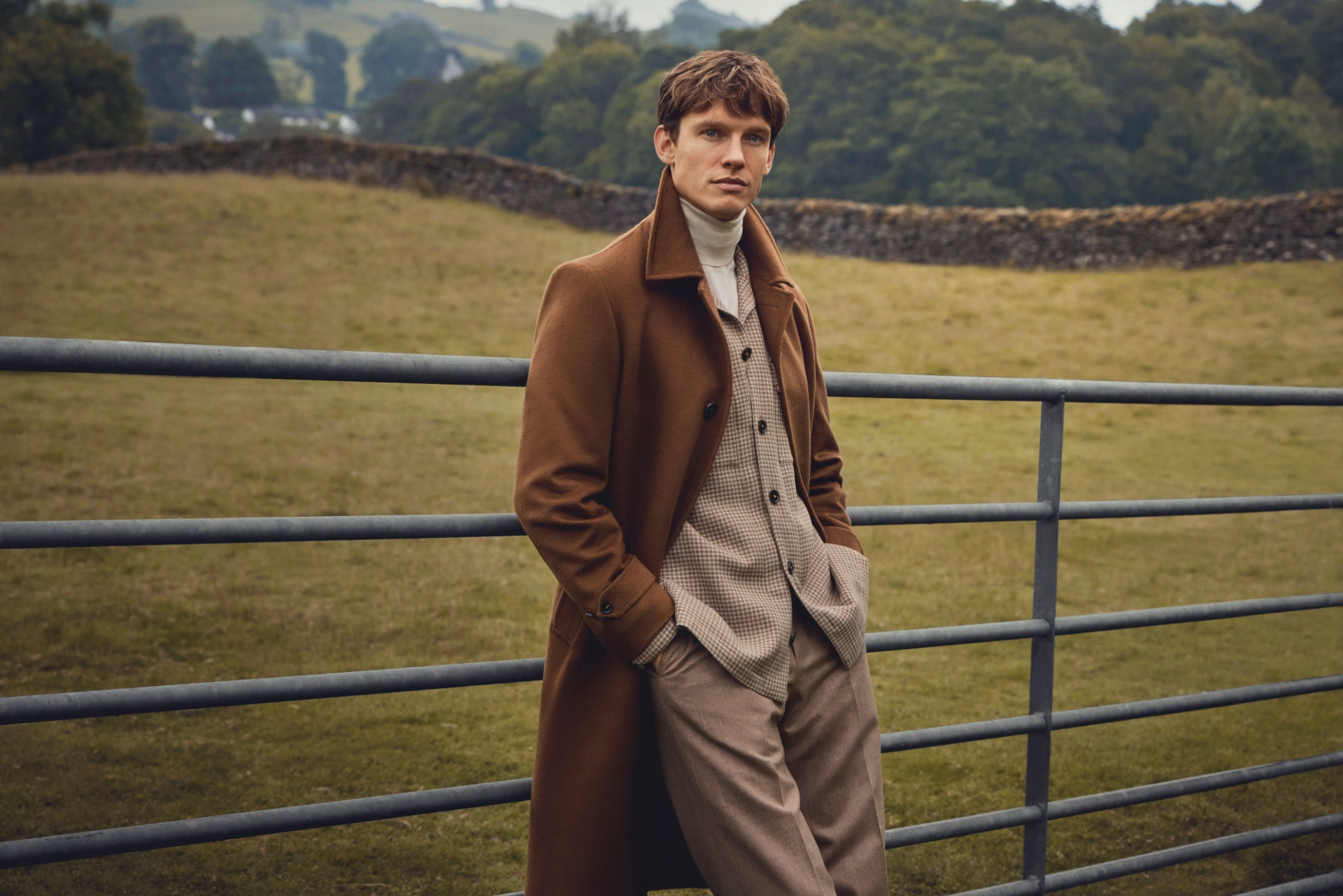
A brown or tan jacket with grey trousers is the classical fall pairing. Tweed, herringbone, and textured brown wools all work well, paired with a mid or charcoal grey trouser. This is one of the most enjoyable spezzato combinations in the fall and winter wardrobe.
A navy jacket with cream or beige trousers is the classical warm-weather spezzato, and it still works into early fall before the deeper tones take over.
Beyond these starting points, the possibilities grow. Burgundy jackets with charcoal trousers. Olive or forest green jackets with grey or brown trousers. Patterned jackets with solid trousers in complementary colors. Each combination is its own small composition.
Why This Matters for Your Wardrobe
The practical case for building spezzato thinking into your wardrobe is straightforward. A client with three bespoke jackets and three bespoke trousers has, in theory, nine possible outfits. In practice, with the right coordination, that number is closer to the full nine. A client whose wardrobe is organized exclusively around matching suits has, from the same number of garments, only three outfits.
Beyond the arithmetic, spezzato produces a specific kind of elegance that matching suits cannot. A well-coordinated broken suit reads as considered in a way that a matching suit, however well-made, often does not. The matching suit says the client bought a suit. The spezzato says the client chose to put this specific jacket with this specific trouser this morning, and did so with intention. The difference is subtle but genuine.
For clients building a bespoke wardrobe with us, incorporating spezzato thinking from the start can significantly extend what the wardrobe actually does. A jacket is not simply the top half of a suit. It is a garment that can be paired with multiple trousers in multiple ways. A trouser is not simply the bottom half of a suit. It is a garment that can go with multiple jackets. Commissioning with this flexibility in mind produces a wardrobe that works harder than one made of discrete, isolated suits.
The Fall Opportunity
Fall is the season where spezzato finds its most natural expression. The fabrics that define fall tailoring, tweed, flannel, cashmere, textured wools, are precisely the fabrics that reward being mixed. A tweed jacket does not want to be worn exclusively with its own matching trousers. It wants to be paired with a flannel, a smooth wool, a corduroy, a cavalry twill. A cashmere sport coat wants to be paired with a flannel trouser in a complementary tone.
For clients thinking about their fall and winter commissions, this is the moment to think about building the wardrobe as a system rather than a collection of isolated garments. A fall jacket commissioned with specific trousers in mind, or specific trousers commissioned to pair with jackets already in the wardrobe, produces results that outperform garments commissioned in isolation.
Starting the Conversation
If spezzato is a new idea for you, or a familiar one you have never actively used, your next bespoke commission is a good opportunity to put it into practice. The conversation at the first appointment can expand beyond the garment itself to how that garment will relate to the rest of what you own, or what you plan to own. The result is a wardrobe that functions as a whole rather than a set of separate pieces.
If you would like to talk through what a spezzato-informed approach to your bespoke wardrobe might look like, we welcome the conversation. Appointments are available at our Shadyside showroom.
Samuel Baron Clothiers is a bespoke men's clothier located at 201 South Highland Avenue in Shadyside, Pittsburgh, PA. Appointments are required. Call (412) 441-1144 or visit samuelbaronclothiers.com to book.