Blazer vs Suit vs Sport Coat (The Shortcut Rule That Makes It Easy)
In our showroom, we hear this question constantly:
“Is this a blazer—or a suit jacket?”
…and right behind it: “Is a sport coat the same thing?”
The confusion is understandable. These three garments can look similar at a glance, especially when they’re on a hanger. But they function differently in a wardrobe—and wearing the wrong one in the wrong context can make an outfit look unintentionally mismatched.
The good news: there’s a simple way to tell the difference quickly, and once you understand it, you’ll never hesitate again.
The Shortcut Rule (Remember This)
If you remember only one thing, remember this:
✅ A suit jacket belongs to a matching pair.
✅ A blazer stands alone and often has contrast details.
✅ A sport coat stands alone and often has texture or pattern.
That’s the foundation. Now let’s break it down with clarity.
1) What Is a Suit Jacket? (The Matching Standard)
A suit jacket is designed to be worn with trousers made from the exact same fabric. It is not simply “a formal jacket”—it is half of a coordinated set.
How to identify a suit jacket
- matching trousers exist (same fabric, same dye lot)
- fabric is typically smoother (worsted wool)
- patterns are subtle and refined
- buttons are usually understated and tonal
- shoulders and chest are designed for a clean, formal line
When to wear it
- business professional environments
- interviews
- weddings
- formal daytime events
Team note: We often see men try to wear a suit jacket as a standalone jacket. It can work in very limited cases, but more often it looks slightly “off” because the jacket was engineered to be part of a matched set. Also remember, if you do wear your suit jacket without the matching pants always have the pants cleaned at the same time as the jacket to ensure the colors continue to match.
2) What Is a Blazer? (The Standalone Classic)
A blazer is a standalone jacket originally inspired by navy club jackets. It’s often more structured than a sport coat and commonly features contrast buttons (brass or metal).
How to identify a blazer
- typically navy (though other colors exist)
- often has contrast buttons
- smooth, refined fabric—less textured than a sport coat
- designed to pair with gray trousers, chinos, and denim
When to wear it
- business casual environments
- dinners and social events
- travel outfits
- occasions where you want polish without full formality
A blazer is one of the smartest wardrobe investments because it creates structure instantly—without requiring you to wear a full suit.
3) What Is a Sport Coat? (Texture + Personality)
A sport coat is also standalone, but it typically carries texture, pattern, or seasonal weight. Historically, it was designed for country wear—hence tweeds, checks, and heavier cloths.
How to identify a sport coat
- texture is common (tweed, herringbone, flannel blends)
- patterns are common (windowpane, glen plaid, houndstooth)
- often seasonal and layered
- looks intentional with denim, chinos, and corduroy
When to wear it
- weekend and social events
- fall/winter gatherings
- creative business casual environments
- situations where you want personality without looking loud
A sport coat has the most range in terms of fabric and styling—and it’s often the easiest way to elevate a casual outfit.
4) The Most Common Mistake: Wearing a Suit Jacket Like a Blazer
This is the error we see most often, and it’s easy to understand why. A navy suit jacket can look similar to a navy blazer…until it doesn’t.
Why suit jackets often fail as standalones
- the fabric is usually too smooth and formal
- the color can mismatch easily with non-matching trousers
- the buttons are often designed to blend in (not to stand alone)
- the jacket can look like an “orphaned” suit piece
If you’re building a wardrobe intentionally, it’s worth owning a true blazer and a true sport coat—so you aren’t forcing your suit jacket to play a role it wasn’t built for.
5) How to Build a Wardrobe That Always Works (3 Jacket Formula)
If you want versatility without clutter, here’s a simple formula we often recommend:
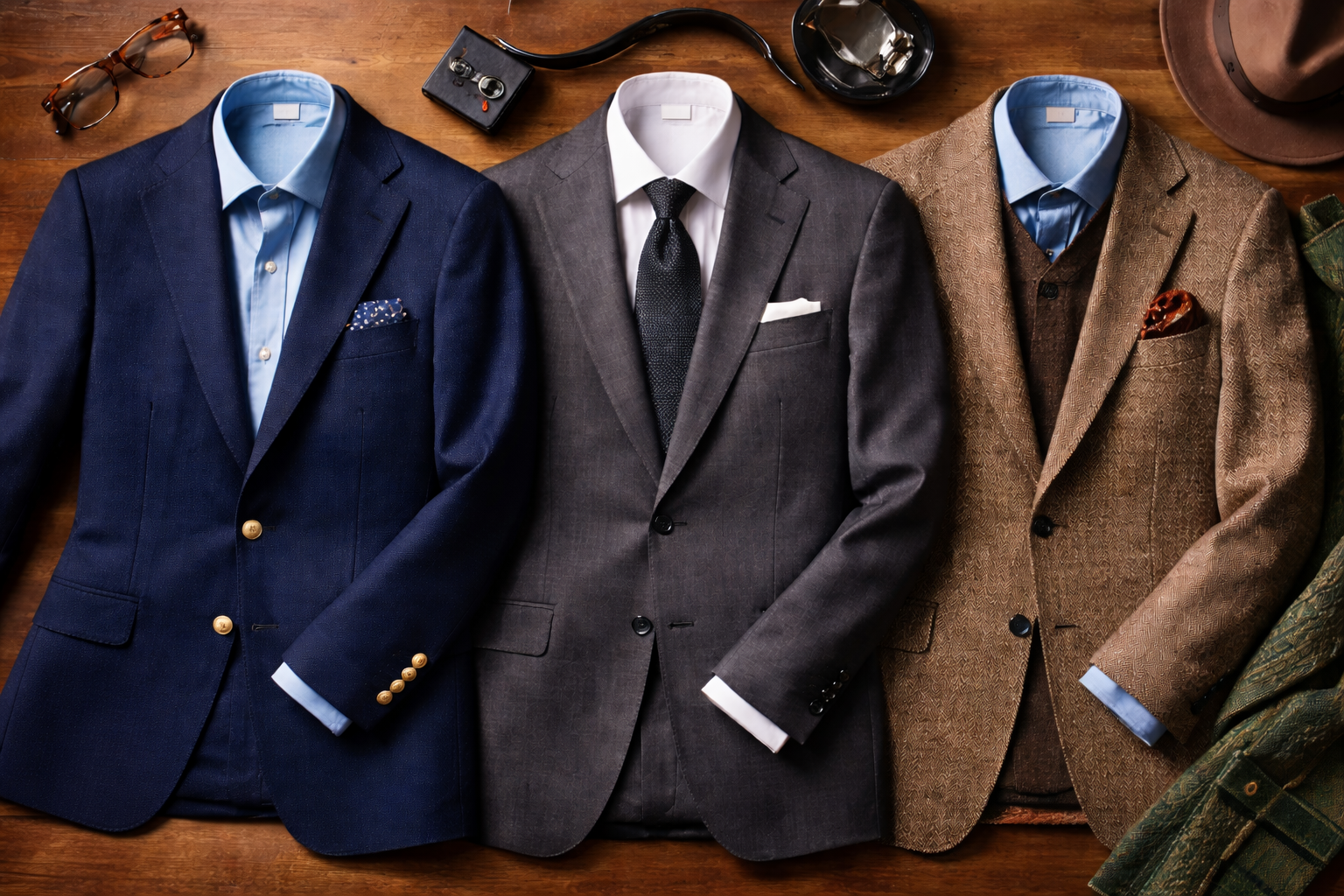
Jacket #1: Navy blazer
Pairs with gray trousers, tan chinos, dark denim, and can travel anywhere.
Jacket #2: Charcoal or navy suit
Your foundation for business, weddings, and formal events.
Jacket #3: Textured sport coat
Tweed, herringbone, or subtle checks—ideal for fall/winter and social environments.
With those three, you can cover:
- professional meetings
- business casual settings
- dinners, weddings, and events
- travel and weekend looks
6) Quick Outfit Examples (So You Don’t Overthink It)
Blazer outfit
Navy blazer + gray trousers + white shirt + dark brown shoes
(Polished, flexible, easy.)
Suit outfit
Charcoal suit + white shirt + dark tie + black shoes
(Formal, confident, universally correct.)
Sport coat outfit
Brown tweed sport coat + dark denim + light blue shirt + loafers or brogues
(Relaxed but elevated.)
If you’re unsure whether a jacket in your closet is truly a blazer, a suit jacket, or a sport coat—or you want to build a wardrobe with clear versatility—we invite you to schedule a consultation at Samuel Baron Clothiers. Our team will guide you through fabric, fit, and the right jacket mix so every piece earns its place.
Read More
To build a wardrobe with refined fit and long-term versatility, explore these guides:
- How a Suit Should Fit: The 10-Point Checklist Every Man Should Know
- Bespoke vs. Made-to-Measure vs. Custom: The Real Difference (From a Clothier)
- Lapels Explained: Notch vs Peak vs Shawl (And What They Signal)
- Why Your Dress Shirt Always Feels Wrong (And How Custom Fixes It)